2026 Social Impact Report: 15% Surge in Community Initiatives US
Anúncios
The 2026 Social Impact Report: Analyzing the 15% Increase in Community-Led Initiatives Across the U.S.
The landscape of social development in the United States is constantly evolving, driven by a myriad of factors ranging from economic shifts to changing societal values. In this dynamic environment, one trend has emerged with particular prominence: the significant surge in Community-Led Initiatives US. The recently released 2026 Social Impact Report offers compelling data, highlighting a remarkable 15% increase in these grassroots efforts across the nation. This report is not just a collection of statistics; it’s a testament to the power of local empowerment, collective action, and the enduring spirit of communities coming together to address their own challenges and build a better future.
Anúncios
Understanding this upward trend requires a deep dive into the report’s findings, exploring the factors contributing to this growth, the diverse forms these initiatives take, and their tangible impacts on local populations. From urban centers to rural landscapes, the spirit of self-determination and mutual aid is flourishing, reshaping the very fabric of American society. This article will unpack the key insights from the 2026 Social Impact Report, providing a comprehensive analysis of this pivotal moment in community development.
Anúncios
The 2026 Social Impact Report serves as a crucial benchmark, offering a panoramic view of the nation’s progress in fostering sustainable and equitable communities. Its findings underscore a critical shift: a move away from top-down solutions towards a more participatory model where local residents are at the forefront of identifying needs and crafting solutions. This paradigm shift is not merely theoretical; it is manifesting in concrete projects that are delivering real, measurable benefits.
Understanding the Rise of Community-Led Initiatives US
The 15% increase in Community-Led Initiatives US is a statistic that demands attention. But what exactly constitutes a community-led initiative, and what factors are fueling this growth? At its core, a community-led initiative is a project or program that originates from within a community, driven by its members, and designed to address local issues or capitalize on local opportunities. These initiatives are characterized by their organic nature, their reliance on local knowledge and resources, and their commitment to empowering residents to take ownership of their collective well-being.
Several interconnected factors appear to be driving this surge. Firstly, there’s a growing recognition of the limitations of external interventions. While invaluable, external aid often struggles to fully grasp the nuanced challenges and unique strengths of a particular community. Local residents, by contrast, possess an intimate understanding of their context, allowing them to design solutions that are more relevant, sustainable, and culturally appropriate. This shift in perspective has empowered communities to step up and fill gaps that might otherwise remain unaddressed.
Secondly, advancements in communication and technology have played a significant role. The ease with which individuals can connect, organize, and mobilize resources online has dramatically lowered the barriers to entry for grassroots movements. Social media platforms, crowdfunding sites, and online collaborative tools have become indispensable assets for these initiatives, enabling them to reach wider audiences, attract volunteers, and secure funding with unprecedented efficiency. This technological enablement has democratized the process of community organizing, allowing more voices to be heard and more hands to contribute.
Thirdly, there’s a palpable desire for greater agency and control at the local level. In an increasingly globalized and complex world, many individuals feel a sense of disconnection from larger political and economic systems. Engaging in Community-Led Initiatives US offers a powerful antidote to this feeling, providing a tangible way for people to effect positive change in their immediate surroundings. It fosters a sense of belonging, purpose, and collective efficacy, reinforcing the idea that local action can indeed make a difference.
Finally, the lingering effects of global crises, such as pandemics and economic downturns, have also spurred communities to become more self-reliant. These events exposed vulnerabilities in existing systems and highlighted the importance of local resilience. In response, many communities have proactively developed their own support networks, resource-sharing programs, and emergency preparedness plans, further solidifying the role of community-led efforts in safeguarding local well-being.
Key Findings from the 2026 Social Impact Report
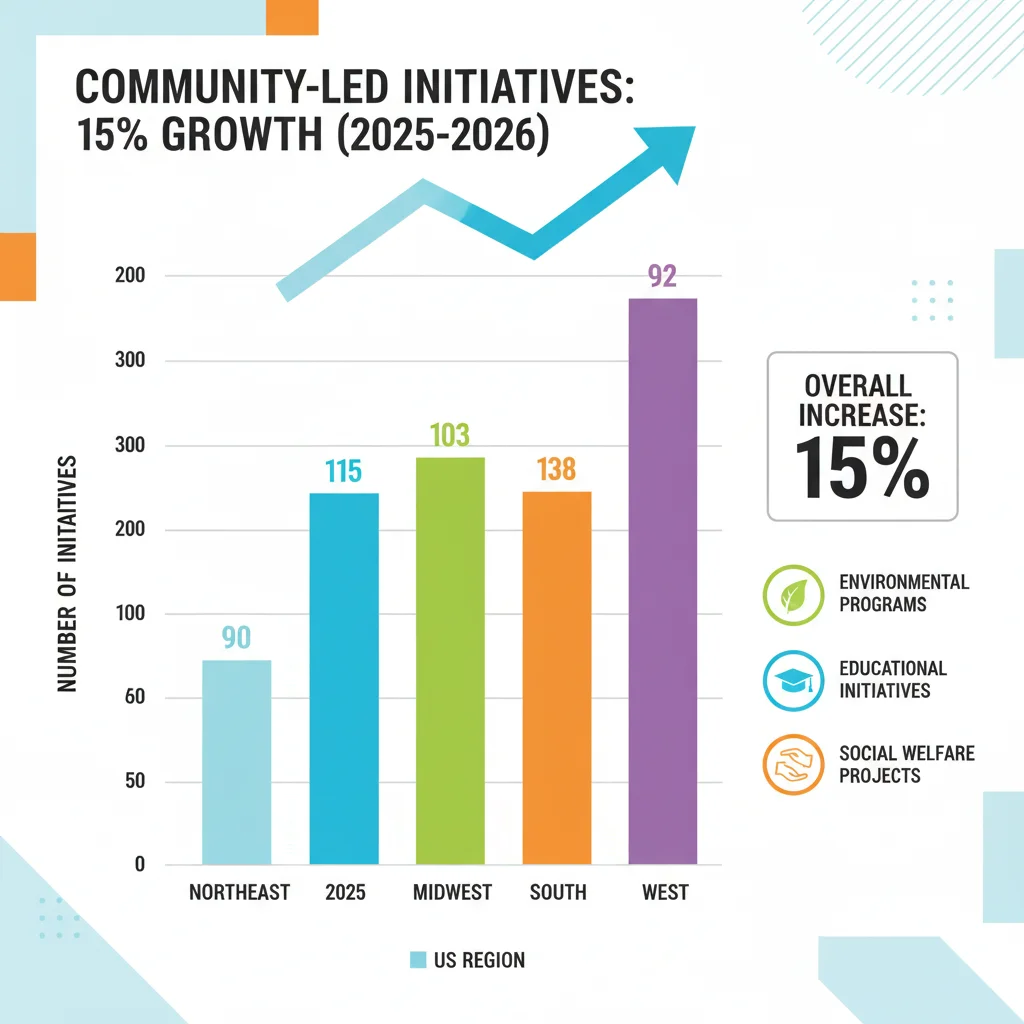
The 2026 Social Impact Report meticulously details the various facets of this growth in Community-Led Initiatives US. It provides a granular analysis, breaking down the 15% increase by geographical region, thematic area, and demographic involvement. This level of detail is crucial for understanding the specific drivers and impacts of these initiatives.
One of the report’s most striking findings is the diversity of these initiatives. They span a wide range of sectors, including:
- Environmental Sustainability: From community gardens and urban farming projects to local recycling programs and renewable energy cooperatives, communities are taking proactive steps to protect their environment and promote sustainable living.
- Education and Youth Development: After-school tutoring programs, mentorship initiatives, vocational training workshops, and community-run libraries are empowering young people and enhancing educational opportunities.
- Health and Wellness: Local health fairs, mental health support groups, accessible fitness programs, and initiatives to address food deserts are improving the physical and mental well-being of residents.
- Economic Development: Micro-lending programs, local business incubators, farmers’ markets, and skill-sharing workshops are fostering local economies and creating new opportunities for entrepreneurship.
- Social Justice and Equity: Advocacy groups, legal aid clinics, initiatives promoting diversity and inclusion, and programs supporting marginalized communities are working towards a more just and equitable society.
The report also highlights the significant role of partnerships in the success of these initiatives. While community-led, many projects benefit from collaborations with local governments, non-profit organizations, businesses, and academic institutions. These partnerships bring in additional resources, expertise, and legitimacy, amplifying the impact of grassroots efforts. The 2026 report emphasizes that synergistic relationships are key to scaling up successful models and ensuring their long-term viability.
Furthermore, the report underscores the importance of inclusive participation. The most successful Community-Led Initiatives US are those that actively engage a diverse cross-section of their population, ensuring that all voices are heard and all perspectives are considered. This includes involving individuals from different age groups, ethnic backgrounds, socioeconomic statuses, and abilities. The report provides compelling evidence that diversity in leadership and participation leads to more innovative solutions and stronger community cohesion.
Impacts and Outcomes: A Ripple Effect of Positive Change
The 15% increase in Community-Led Initiatives US is not just a numerical indicator; it represents a tangible improvement in the quality of life for millions of Americans. The 2026 Social Impact Report meticulously documents the wide-ranging impacts and outcomes of these initiatives, showcasing their transformative power.
One of the most significant impacts is the strengthening of social capital. By bringing people together to work towards common goals, these initiatives foster trust, reciprocity, and a sense of shared identity. This enhanced social cohesion makes communities more resilient in the face of adversity, better equipped to address future challenges, and more vibrant places to live. The report provides numerous anecdotes and case studies illustrating how these initiatives have built bridges between disparate groups, healed social divides, and created stronger, more interconnected networks.
Economically, community-led initiatives often stimulate local economies. By supporting local businesses, creating employment opportunities, and keeping resources within the community, they contribute to a more robust and sustainable economic ecosystem. For instance, a community-run farmers’ market not only provides fresh produce to residents but also creates income for local farmers and artisans, fostering a virtuous cycle of economic growth.
Environmentally, these initiatives are leading to tangible improvements in local ecosystems. Urban greening projects reduce heat island effects, improve air quality, and enhance biodiversity. Community recycling programs divert waste from landfills, conserving resources and reducing pollution. These grassroots environmental efforts often complement larger-scale government initiatives, demonstrating the power of collective action at every level.
In terms of health and well-being, the impacts are equally profound. Access to fresh, healthy food through community gardens can combat food insecurity and improve dietary habits. Local fitness programs encourage active lifestyles, reducing the incidence of chronic diseases. Mental health support groups provide vital resources for individuals struggling with stress, anxiety, and depression, fostering a more supportive and compassionate community environment. The report highlights how these initiatives often address health disparities, ensuring that vulnerable populations have access to essential services and resources.
Furthermore, Community-Led Initiatives US play a crucial role in empowering marginalized groups. By providing platforms for these groups to advocate for their rights, voice their concerns, and develop their leadership skills, these initiatives contribute to greater social equity and inclusion. The 2026 report showcases numerous examples of how these efforts have led to policy changes, increased representation, and improved access to opportunities for previously underserved populations.
Challenges and Opportunities for Sustained Growth
While the 15% increase in Community-Led Initiatives US is undoubtedly a positive development, the 2026 Social Impact Report also acknowledges the challenges that these initiatives face and identifies opportunities for sustained growth. Understanding these hurdles is critical for ensuring that this momentum continues and that the benefits of community empowerment are realized across the nation.
One of the primary challenges is securing sustainable funding. Many grassroots initiatives rely on volunteer labor and sporadic donations, making their long-term viability uncertain. The report emphasizes the need for more accessible and flexible funding mechanisms, including grants specifically tailored for community-led projects, crowdfunding support, and innovative partnerships with philanthropic organizations and corporate social responsibility programs. Developing robust fundraising strategies and diversifying revenue streams are crucial for these initiatives to thrive.
Another significant challenge is capacity building. While communities possess immense passion and local knowledge, they may lack the technical skills in areas such as project management, grant writing, data collection, and impact assessment. The report recommends increased investment in training and mentorship programs that can equip community leaders with the tools they need to effectively plan, execute, and evaluate their initiatives. This includes providing access to resources that help communities measure their impact, demonstrating their value to potential funders and stakeholders.
Burnout among volunteers and leaders is also a common issue. The dedication required to sustain community-led efforts can be immense, and without adequate support structures, individuals can become overwhelmed. The 2026 Social Impact Report suggests strategies for fostering a culture of shared leadership, promoting self-care among activists, and celebrating successes to maintain morale and prevent attrition. Recognizing and valuing the contributions of volunteers is paramount.
Navigating bureaucratic hurdles and regulatory complexities can also be a significant obstacle, particularly for smaller, less formalized groups. The report advocates for simplified administrative processes and greater support from local government agencies to facilitate the establishment and operation of community-led initiatives. This could involve creating dedicated liaison offices, providing clear guidelines, and offering technical assistance to help groups comply with relevant regulations.
Despite these challenges, the opportunities for sustained growth are immense. The report identifies several key areas for future development. Firstly, there is potential for greater cross-sector collaboration. Encouraging more partnerships between community groups, businesses, government entities, and educational institutions can unlock new resources and expertise, leading to more impactful and scalable solutions. Building robust networks of collaborators can create a powerful ecosystem of support for these initiatives.

Secondly, leveraging technology even further can enhance the reach and efficiency of Community-Led Initiatives US. This includes developing user-friendly platforms for volunteer recruitment, resource sharing, and impact reporting. The report suggests exploring how artificial intelligence and data analytics can be used to identify community needs more effectively and optimize resource allocation. Digital tools can empower communities to connect, learn, and grow in unprecedented ways.
Thirdly, fostering a culture of learning and adaptation is crucial. The report encourages initiatives to regularly evaluate their effectiveness, learn from both successes and failures, and adapt their strategies accordingly. This iterative approach ensures that initiatives remain responsive to evolving community needs and can continuously improve their outcomes. Sharing best practices and lessons learned across different communities can accelerate progress nationwide.
Finally, the report stresses the importance of advocacy. Community-led initiatives need strong advocates at local, state, and national levels to ensure that their voices are heard and that policies are supportive of grassroots efforts. This includes advocating for funding, policy changes that reduce barriers, and increased recognition of the vital role these initiatives play in societal well-being. By engaging with policymakers, communities can create an enabling environment for their continued growth and success.
The Future of Community-Led Initiatives in the US
The 2026 Social Impact Report paints a hopeful picture for the future of Community-Led Initiatives US. The 15% increase is not merely a transient spike but indicative of a deeper, more fundamental shift in how communities are organizing themselves and addressing their challenges. This trend suggests a future where local residents are increasingly empowered, taking greater ownership of their collective destiny, and building more resilient, equitable, and vibrant places to live.
Looking ahead, we can anticipate several key developments. There will likely be a continued diversification of initiative types, with new models emerging to address novel challenges such as climate change adaptation, digital literacy gaps, and evolving social inequalities. The integration of technology will become even more sophisticated, enabling initiatives to operate more efficiently, reach wider audiences, and measure their impact with greater precision.
The role of data will also grow in importance. As initiatives become more adept at collecting and analyzing data, they will be better positioned to demonstrate their effectiveness, attract funding, and advocate for policy changes. This data-driven approach will enhance the credibility and influence of grassroots movements, allowing them to exert a greater impact on public discourse and decision-making.
Furthermore, the 2026 report suggests that the concept of ‘community’ itself may expand. While traditionally focused on geographical proximity, the rise of online communities and shared interest groups means that initiatives may increasingly form around common causes or identities, transcending physical boundaries. This could lead to a new wave of networked community-led initiatives, leveraging collective intelligence and resources on a larger scale.
Ultimately, the 2026 Social Impact Report serves as a powerful reminder of the enduring strength and ingenuity of the American people. The 15% increase in Community-Led Initiatives US is a testament to the idea that real change often begins at the grassroots, fueled by passion, collaboration, and an unwavering commitment to building a better world, one community at a time. As we move forward, fostering and supporting these initiatives will be paramount to creating a more just, sustainable, and prosperous society for all.


