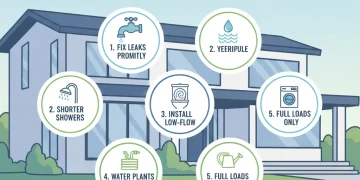
Water Conservation 2026: 7 Expert Tips to Cut Household Usage by 20% Nationally

Anúncios
Water Conservation 2026: 7 Expert Tips to Cut Household Usage by 20% Nationally
In an era where environmental consciousness is paramount, household water conservation has become more than just a buzzword; it’s a necessity. As we navigate through 2026, the challenges of water scarcity and climate change continue to mount, making every drop count. This comprehensive guide provides actionable, expert-backed strategies designed to help every household in the nation reduce their water usage by a significant 20%. By implementing these tips, you not only contribute to a sustainable future but also enjoy tangible savings on your utility bills. Let’s dive into the practical steps you can take today to make a profound impact.
Anúncios
The Imperative of Household Water Conservation in 2026
The global water crisis is no longer a distant threat; it’s a present reality. Regions across the nation are experiencing unprecedented droughts, fluctuating rainfall patterns, and increased demand for freshwater resources. As a result, the call for household water conservation has grown louder and more urgent. The average American household uses approximately 300 gallons of water per day, a figure that many experts believe is unsustainable in the long term. Reducing this by 20% nationally would save billions of gallons annually, alleviating pressure on our ecosystems and ensuring water security for future generations. This isn’t just about turning off the tap; it’s about a holistic approach to water management within our homes and communities.
Anúncios
Beyond the environmental benefits, conserving water offers direct financial advantages. Lower water bills translate into more disposable income for families, and in some regions, there are even rebates and incentives for homeowners who invest in water-efficient appliances and practices. Moreover, adopting water-saving habits can increase your home’s value and appeal to environmentally conscious buyers. The shift towards sustainable living is gaining momentum, and household water conservation is a cornerstone of this movement. Let’s explore the key areas where you can make the most significant difference.
Tip 1: Upgrade to Water-Efficient Appliances and Fixtures
One of the most impactful ways to achieve significant household water conservation is by investing in modern, water-efficient appliances and fixtures. Older models of washing machines, dishwashers, toilets, and showerheads often consume far more water than necessary. The good news is that technology has advanced considerably, offering high-performance alternatives that use a fraction of the water.
Low-Flow Showerheads and Toilets
Replacing an old showerhead with a low-flow model can reduce water usage by 2.5 gallons per minute or more, without compromising water pressure. Imagine the savings over a year for a family of four! Similarly, older toilets can use up to 7 gallons per flush, while modern, high-efficiency models use 1.6 gallons or less, and some even offer dual-flush options. This single upgrade can account for a substantial portion of your 20% reduction goal in household water conservation.
Energy Star Certified Appliances
When it comes to washing machines and dishwashers, look for the EPA’s Energy Star label. Energy Star certified washing machines use about 25% less energy and 33% less water than conventional models. Dishwashers with this certification can save thousands of gallons of water over their lifetime. While the initial investment might seem higher, the long-term savings on water and energy bills make these upgrades incredibly cost-effective. Many utility companies also offer rebates for purchasing these appliances, further sweetening the deal for household water conservation efforts.
Consider a household that replaces an old 3.5 GPM (gallons per minute) showerhead with a new 1.5 GPM model. For a 10-minute shower, this saves 20 gallons of water. If two people shower daily, that’s 40 gallons saved per day, or 14,600 gallons annually from just one change! Multiply this across millions of households, and the national impact becomes staggering. This is the power of smart upgrades in promoting household water conservation.
Tip 2: Fix Leaks Promptly and Regularly Check for Drips
Even the smallest leak can lead to significant water waste over time. A dripping faucet, a running toilet, or a hidden pipe leak can collectively waste thousands of gallons of water per year. Regularly checking for and fixing these leaks is a fundamental aspect of effective household water conservation.
Identifying Common Leaks
- Faucets: A slow drip can waste 10-20 gallons of water per day. Replacing a worn-out washer or O-ring is usually a simple and inexpensive fix.
- Toilets: To check for a silent toilet leak, add a few drops of food coloring to the toilet tank. If color appears in the bowl after 15-20 minutes without flushing, you have a leak. This often indicates a faulty flapper valve, which is also an easy and cheap replacement.
- Showerheads: Similar to faucets, a dripping showerhead can be a major culprit.
- Outdoor Spigots and Hoses: Leaks here are often overlooked but can be substantial. Check all outdoor connections regularly.
The Hidden Dangers of Pipe Leaks
More insidious are hidden pipe leaks, which can go undetected for long periods, causing not only water waste but also potential structural damage to your home. Monitor your water meter regularly. If your water meter is moving when no water is being used inside or outside your home, it’s a strong indication of a leak somewhere in your system. Professional plumbers can use advanced tools to detect and repair these hidden leaks, safeguarding both your water supply and your property. Prioritizing leak detection and repair is a crucial step towards achieving your household water conservation goals.
Consider a toilet leaking at a rate of just one gallon per hour. This equates to 24 gallons per day, and over 8,760 gallons per year. This single leak could easily negate all your other household water conservation efforts. The cumulative effect of numerous small leaks across a city or nation is astronomical, highlighting the importance of vigilance in leak detection and repair.
Tip 3: Optimize Your Laundry and Dishwashing Habits
Laundry and dishwashing are two of the biggest water consumers in many households. Adjusting your habits in these areas can yield significant savings and contribute greatly to household water conservation.
Full Loads Only
This is perhaps the simplest yet most effective tip. Always run your washing machine and dishwasher only when they are full. Modern appliances are designed to be most efficient with full loads. Running half-empty cycles wastes both water and energy. If you absolutely must wash a smaller load, utilize the ‘light’ or ‘eco’ settings if your machine has them, which are typically designed to use less water.
Scraping vs. Rinsing Dishes
Many people pre-rinse dishes before putting them in the dishwasher. For most modern dishwashers, this is unnecessary. Simply scrape off food scraps into the trash or compost bin. Pre-rinsing can waste gallons of water per load. The powerful jets and detergents in contemporary dishwashers are usually sufficient to clean dishes without this extra step. This small change in routine can significantly boost your household water conservation efforts.
Furthermore, consider the temperature of the water. While hot water is often used for sanitization, many detergents are effective with cooler water, especially for lightly soiled items. Using cold water for laundry not only saves water but also reduces energy consumption, leading to even greater savings on utility bills. These simple habit adjustments are powerful tools for household water conservation.
Tip 4: Rethink Your Landscape and Outdoor Water Use
Outdoor water use, particularly for landscaping, can account for a substantial portion of a household’s total water consumption, often exceeding indoor use in warmer climates. Implementing smart outdoor water management strategies is vital for household water conservation.
Xeriscaping and Drought-Tolerant Plants
Xeriscaping is a landscaping approach that reduces or eliminates the need for supplemental water from irrigation. This involves choosing drought-tolerant native plants that are well-adapted to your local climate. These plants not only require less water but also often need less maintenance, such as mowing and fertilizing. Replacing water-intensive lawns with xeriscaped gardens can dramatically cut down on your outdoor water use.
Efficient Irrigation Systems
If you have a lawn or garden that requires irrigation, ensure your system is as efficient as possible. Drip irrigation systems deliver water directly to the plant roots, minimizing evaporation and runoff, and are far more efficient than traditional sprinklers. Consider installing a smart irrigation controller that uses local weather data to adjust watering schedules, preventing unnecessary watering after rainfall or during cooler periods. This intelligent approach to watering is a game-changer for household water conservation.

Watering during the cooler parts of the day, such as early morning or late evening, also minimizes evaporation. Avoid watering on windy days. Adjust sprinklers so they only water your lawn or garden, not the sidewalk or driveway. These seemingly minor adjustments can collectively lead to substantial savings in your household water conservation journey.
Many homeowners underestimate the amount of water used for outdoor landscaping. A single traditional sprinkler can use as much as 10-20 gallons per minute. Running it for 30 minutes, three times a week, can easily add thousands of gallons to your monthly water bill. By adopting xeriscaping or smart irrigation, a household can often reduce its outdoor water usage by 50% or more, contributing significantly to the national 20% reduction target for household water conservation.
Tip 5: Practice Water-Wise Personal Habits
While large-scale changes are important, everyday personal habits play a crucial role in overall household water conservation. Small adjustments to your daily routine can add up to significant savings.
Shorter Showers and Turning Off the Tap
Reducing your shower time by just a minute or two can save gallons of water each day. A typical shower uses about 2.5 gallons per minute. Cutting a 10-minute shower to 5 minutes saves 12.5 gallons. Similarly, turning off the tap while brushing your teeth, shaving, or washing your hands is a simple habit that prevents unnecessary water flow. These actions are easy to implement and require no financial investment, making them accessible to everyone committed to household water conservation.
Full Baths vs. Showers
Consider the water used for baths compared to showers. A full bathtub can require 30-50 gallons of water, while a typical 5-minute shower with a low-flow head uses about 12.5 gallons. For daily cleaning, showers are generally more water-efficient. However, if you enjoy an occasional bath, make it count by ensuring the tub stopper is secure and you’re not overfilling. Educating family members, especially children, about these simple water-saving habits can foster a culture of household water conservation.
Even small actions, when multiplied by millions of people, create a huge impact. Imagine if every person in the nation shaved just one minute off their daily shower. The collective water savings would be immense, directly contributing to the national target for household water conservation. It’s about mindful consumption and recognizing the value of every drop.
Tip 6: Harvest Rainwater and Reuse Greywater
For those looking to take their household water conservation to the next level, rainwater harvesting and greywater reuse offer advanced solutions. These methods allow you to utilize non-potable water for various purposes, significantly reducing your reliance on treated municipal water.
Rainwater Harvesting Systems
Rainwater harvesting involves collecting and storing rainwater from your roof in barrels or larger cisterns. This collected water can then be used for irrigating gardens, washing cars, flushing toilets, or even for laundry (with proper filtration and treatment). A simple rain barrel can collect hundreds of gallons of water during a single downpour, providing a free and sustainable water source for outdoor use. Larger systems can be integrated into your home’s plumbing for indoor non-potable uses. This is an excellent strategy for boosting household water conservation, especially in regions with good rainfall.
Greywater Reuse Systems
Greywater refers to wastewater from showers, bathtubs, washing machines, and bathroom sinks (excluding toilet water, which is blackwater). With a proper greywater recycling system, this water can be filtered and safely reused for irrigation. Some advanced systems can even treat greywater for indoor non-potable uses. While installing a greywater system might require a more significant initial investment and adherence to local regulations, the long-term benefits in terms of water savings and reduced environmental impact are substantial. It’s a cutting-edge approach to household water conservation.

Before implementing any rainwater harvesting or greywater reuse system, it’s crucial to check local building codes and regulations, as these vary by region. However, these systems represent a significant step towards self-sufficiency and extreme household water conservation, offering a path to dramatically lower your water footprint and contribute to national water resilience.
Imagine a household that collects 500 gallons of rainwater during a storm, and then uses that water for garden irrigation over the next few weeks instead of municipal water. This directly reduces their metered water consumption. Similarly, if greywater from showers is used to water the landscape, it’s diverting water that would otherwise go down the drain and into the sewer system, doubling its utility. These advanced methods are powerful levers for achieving and exceeding the 20% national target for household water conservation.
Tip 7: Educate and Engage Your Household and Community
Sustainable household water conservation is not a solo effort; it requires the collective action and understanding of everyone in your home and community. Education and engagement are key to fostering a water-wise culture.
Involve Everyone in the Family
Talk to your family members about the importance of water conservation. Explain why these changes are necessary and how their individual actions contribute to a larger goal. Make it a fun and interactive process. For example, challenge family members to take shorter showers or see who can identify a leak first. Children, especially, can become enthusiastic advocates for water saving once they understand its importance. This collective buy-in is essential for sustained household water conservation.
Participate in Community Initiatives
Look for local programs, workshops, or community events focused on water conservation. Many municipalities offer free water-saving kits, workshops on xeriscaping, or rebates for water-efficient upgrades. Engaging with your community not only provides valuable resources and knowledge but also strengthens the collective effort towards water sustainability. Sharing tips and experiences with neighbors can inspire broader adoption of household water conservation practices.
Monitor Your Water Usage
Many utility companies now offer online portals or smart meters that allow you to track your water usage in real-time. Regularly reviewing your water bill and monitoring your consumption can help identify patterns, pinpoint areas of high usage, and track your progress towards your 20% reduction goal. Seeing the numbers can be a powerful motivator for continued household water conservation efforts.
A household that actively educates its members and monitors usage is far more likely to achieve significant water savings. When everyone understands the ‘why’ behind household water conservation, the ‘how’ becomes second nature. This collective consciousness is what will drive the national 20% reduction target and ensure water security for the future.