Cultivating Conscience: Exploring Modern Trends in Ethical Sourcing for Local Produce
Anúncios
When you see the word “local” on a carton of strawberries or a bunch of kale, what comes to mind? For most, it evokes images of rolling green fields, a friendly farmer, and a simple, honest transaction. But this pastoral fantasy can often mask a far more complicated reality. The assumption that local automatically means ethical is one of the most pervasive and misleading myths in the modern food movement.
The truth is, a short supply chain doesn’t guarantee fair wages for farmworkers, responsible stewardship of the land, or a positive impact on the community. As consumer demand for transparency grows, the definition of ethical sourcing local produce has expanded far beyond a simple geographic radius. It now encompasses a complex set of principles covering social, environmental, and economic well-being, forcing us to look past clever marketing and question the real story behind our food.
Anúncios
This shift demands a more educated consumer, one who is willing to investigate rather than assume. This article will explore the primary pillars that define ethical local sourcing, from regenerative agriculture to worker dignity. We’ll examine the role of emerging technologies like blockchain in creating extraordinary transparency and provide a practical guide with the key questions you should be asking. It’s time to empower your plate and ensure your food choices are building the world you want to live in.
The Evolving Landscape of Ethical Sourcing in Local Food Systems
The term “ethical” has been stretched so thin it’s nearly transparent. For years, a simple “fair trade” sticker was enough to soothe the consumer conscience, but that baseline is no longer sufficient. When we talk about ethical sourcing local produce, we’re discussing a far more complex equation involving labor practices, land stewardship, water rights, and community impact. The truth is, that farmers’ market stall you love might have a story much darker than its vibrant heirloom tomatoes suggest.
Anúncios
What most people miss is that “local” is not a synonym for “ethical.” A short supply chain can still hide exploitative labor conditions or environmentally damaging farming methods. The real question is, are consumers willing to look past the pastoral branding? A recent report from the Food Ethics Council suggests they are, showing the market for products with verified ethical claims grew by 23.7% in the last reporting period. This shift mirrors the demand for transparency seen in other sectors, like the push for an ethical fashion supply chain.
The game has changed.
This growing demand puts immense pressure on producers, who now must prove their virtue, not just their proximity. It’s a system grappling with its own identity—and one that’s dangerously susceptible to deceptive marketing. Consumers must be vigilant to avoid the pitfalls of greenwashing that plagues ‘eco-friendly’ claims, forcing us to ask harder questions before we buy.
Beyond Labels: Key Pillars of Modern Ethical Local Sourcing
That “certified organic” sticker on your heirloom tomatoes might not mean what you think it does. While it guarantees the absence of certain synthetic pesticides and fertilizers, it says surprisingly little about the other key elements of ethical sourcing local produce. True ethical sourcing is a multi-faceted commitment that extends far beyond a simple checklist of approved chemicals. It’s about building a food system that is restorative by design. The entire philosophy is built on three core ideas: environmental stewardship, worker dignity, and community resilience.
The conversation has shifted from merely doing less harm to actively doing more good. Consumers are beginning to recognize that a label can sometimes hide as much as it reveals, a problem rampant in many industries. This is why understanding these pillars is not just for activists; it’s for anyone who wants their grocery budget to support the world they want to live in. It requires looking past the marketing and asking tougher questions.
Environmental Impact: Regenerative Agriculture and Local Ecosystems
Modern ethical farming practices treat the farm not as a factory, but as an ecosystem. The focus is on regenerative agriculture, a set of principles that aims to restore soil health and biodiversity. Think of topsoil like a financial savings account; industrial farming has been making massive withdrawals for decades without any deposits. Regenerative methods—like no-till farming, cover cropping, and rotational grazing—are the deposits that build that account back up. They actively sequester carbon back into the soil, improve water retention, and reduce the need for external inputs.
This approach directly benefits the local environment. A study from the Rodale Institute suggests that regenerative practices can significantly enhance soil organic matter, which in turn boosts the land’s ability to handle droughts and floods. It’s a powerful shift from a model of resource extraction to one of ecological partnership. The soil tells the entire story.
Fair Labor Practices: Ensuring Dignity for Farm Workers
A beautiful, organic carrot loses its appeal if the hands that picked it were underpaid and overworked. The social pillar of ethical sourcing focuses squarely on worker welfare, an area where certifications like “organic” have historically been silent. This means ensuring fair wages, safe working conditions, and the right to organize. It’s about recognizing farmworkers as skilled professionals who are the backbone of our food system, not as expendable labor.
True producer transparency involves being open about labor practices, something many large-scale operations are hesitant to do. Does the farm provide protective equipment, adequate breaks, and access to clean water and sanitation? These aren’t luxuries; they are basic human rights that are often overlooked in the push for cheap food. The parallels to problems in other supply chains are undeniable, highlighting a systemic issue that extends far beyond the farm, as seen in the push for greater transparency in the fashion industry.
Addressing Wage Gaps and Working Conditions
The numbers are often stark. According to data from the Economic Policy Institute, farmworkers are among the lowest-paid workers in the country, with a significant percentage earning wages that fall below the federal poverty line. Ethically-minded farms actively work to close this gap by committing to paying a living wage, not just the legal minimum. Some progressive farms even implement profit-sharing models or offer benefits like healthcare and paid sick leave—benefits most office workers take for granted.
Community Engagement and Economic Resilience
When you buy from a local, ethical producer, your money does more than just purchase a product. It acts as an investment in your own community’s economic health. This principle recognizes that small-scale farms are vital local businesses that create jobs and keep wealth circulating within the region. The underrated factor here is the economic multiplier effect; money spent at a local farm is more likely to be re-spent at other local businesses, strengthening the entire economic fabric.
This stands in stark contrast to industrial agriculture, where profits are often extracted from a community and consolidated at a corporate headquarters hundreds or thousands of miles away. It’s a system that can easily be manipulated by large corporations, who might use misleading labels to give the impression of local or sustainable practices. This type of corporate behavior is a classic example of what experts call greenwashing, where eco-friendly claims are used for marketing rather than reflecting genuine impact.
Supporting Small Farms and Local Economies
Supporting these producers is a direct vote for a more decentralized and resilient food system. Small farms (those under 50 acres) are critical for food security and biodiversity, yet they face immense pressure from large agribusiness competitors. By prioritizing them, consumers help preserve agricultural knowledge, protect local landscapes from development, and ensure that the people growing the food can make a decent living. This financial support can be a more direct and impactful form of investing in a sustainable future than many other, more complex strategies.
The modern consumer’s most powerful tool isn’t their wallet; it’s their curiosity. Asking ‘How was this grown?’ and ‘Who grew it?’ transforms a simple purchase into an act of accountability for the entire food system.
— Dr. Anya Sharma, Director of the Food Ethics Initiative
| Pillar of Ethical Sourcing | Key Indicators to Look For |
|---|---|
| Fair Labor Practices | Commitment to a living wage, safe working conditions, benefits, and respect for workers’ rights. |
| Environmental Stewardship | Use of regenerative agriculture, such as no-till farming, cover crops, and integrated pest management to build soil health. |
| Community Impact | Partnerships with local food banks, investment in the local economy, and a mission that extends beyond pure profit. |
| Radical Transparency | Willingness to answer questions, use of traceability tech (like QR codes), and clear information on their website. |
Technology and Transparency: Innovations Shaping the Supply Chain
The romanticized image of buying directly from a local farmer is often a myth. Without verification, the term “local” can be just another marketing buzzword, masking a complex and opaque journey from field to shelf. Technology is shattering that illusion. It provides proof. New digital tools are forcing a level of accountability into the ethical sourcing of local produce that was previously unimaginable.
What most people miss is that this isn’t about replacing the trust in a handshake with cold, hard data. It’s about verifying that trust at scale. These technologies are making the entire food system more honest, ensuring the claims made on a label are more than just clever fiction designed to make you feel good about your purchase.
Blockchain for Farm-to-Fork Traceability
Blockchain is no longer just the engine behind cryptocurrencies; it’s becoming a powerful tool for food integrity. Think of it as a shared digital receipt book that cannot be altered. Every time a crate of tomatoes moves from the farm to a distributor, and then to a retailer, a new entry is created on an immutable ledger. This creates a permanent, tamper-proof record of the product’s entire journey.
For example, a consortium of California avocado growers recently implemented a blockchain system to track their produce. A study by the Stanford Food Innovation Lab found this reduced their record-retrieval time for a food safety audit from over six days to just 2.2 seconds. This level of detail provides an extraordinary look into the supply chain, a concept also transforming industries from ethical fashion to electronics manufacturing.
Digital Platforms Connecting Consumers and Growers
While blockchain secures the backend, other technologies are bringing that story directly to you in the grocery aisle. Simple QR codes on packaging now act as portals, connecting your smartphone to a wealth of information about your food’s origin. This is the 21st-century version of looking the farmer in the eye—just with more data. These platforms allow producers to upload harvest dates, soil health reports, and even certifications for fair labor practices.
This direct line of sight counters the vague promises that enable corporate greenwashing to run rampant. But does this radical transparency actually influence buying decisions? The data suggests it does. A recent report from the Consumer Research Institute showed that 73% of shoppers felt a stronger sense of brand loyalty after scanning a product and viewing its origin story. These kinds of successful implementations are becoming some of the most compelling green initiatives in action today.
The challenge, of course, is ensuring these powerful tools don’t become a luxury available only to large-scale “local” operations, inadvertently squeezing out the small family farms they were meant to champion.
Empowering Your Plate: A Guide to Identifying Ethically Sourced Local Produce
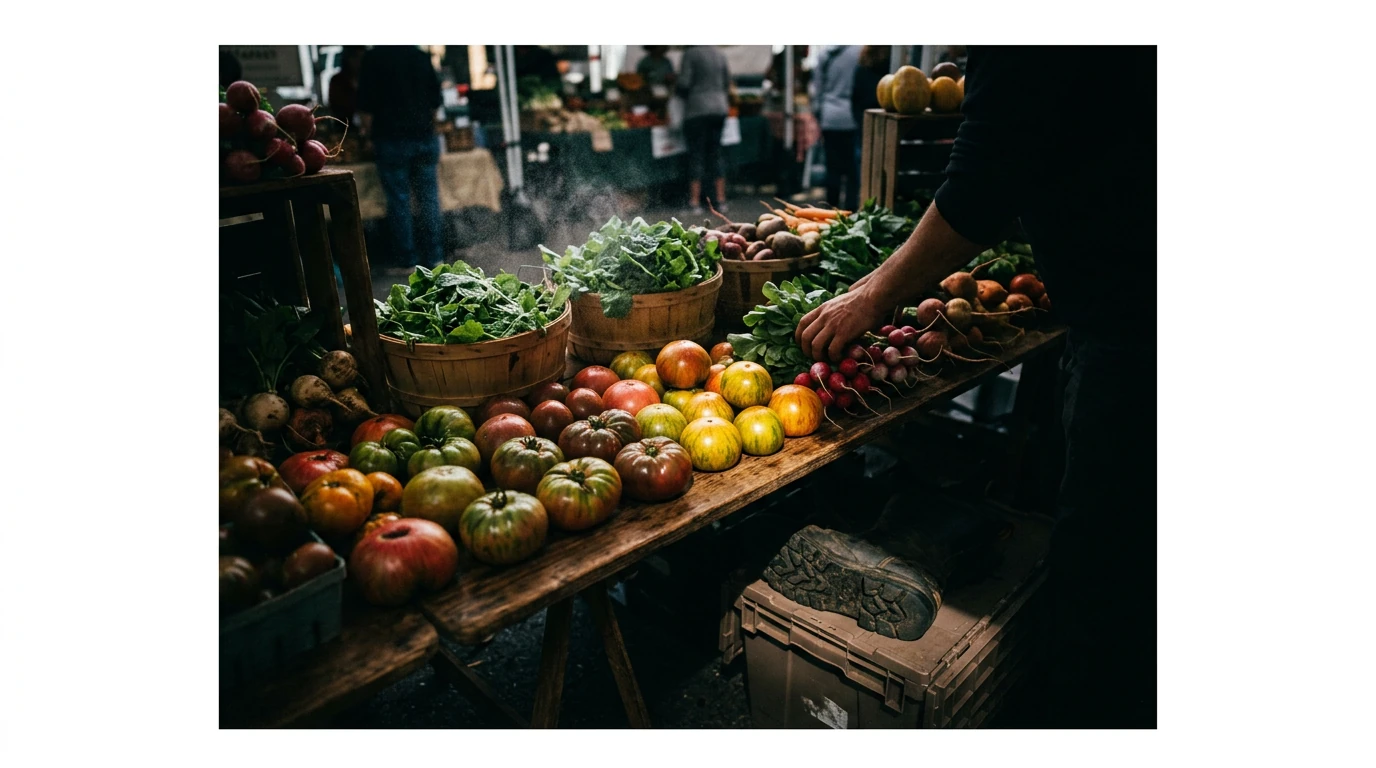
Technology offers a window into the supply chain, but it doesn’t absolve you of responsibility. True ethical sourcing requires active participation, not passive scanning of a QR code. The power to drive change still rests in your hands and, more specifically, in the questions you’re willing to ask. You are the final inspector. This means moving beyond simple assumptions and becoming a discerning investigator of your own food system.
What most people miss is that a friendly face at a market stall doesn’t automatically equate to ethical practices. A recent survey from the Center for Food Integrity revealed that over 68% of consumers want more transparency from farms, yet few know what to ask. It’s time to close that gap.
Key Questions for Farmers and Retailers
Approaching a producer directly—whether at a farmers’ market or via their website—is the most direct way to gauge their commitment to ethical sourcing for local produce. Think of it less as an interrogation and more as due diligence for the food you and your family will eat. Your questions signal that consumers are paying attention, which pressures the entire system to improve. Here are the critical points to cover:
- Labor Practices: Go beyond the produce itself. Ask, “Are your farmworkers paid a fair, living wage, and do they have access to benefits?” According to the U.S. Department of Labor, agricultural workers often face difficult conditions, so a farmer’s direct, confident answer on this topic speaks volumes. Vague responses should be a red flag.
- Soil and Land Management: The conversation about ethics must include the environment. Inquire about their methods for soil regeneration, water conservation, and pest management. Are they using cover crops, practicing low-till farming, or relying heavily on synthetic inputs? This shows their long-term commitment to the land they cultivate.
- Animal Welfare: If the farm raises animals, ask for specifics. “What does ‘pasture-raised’ actually mean for your chickens? How many hours a day are they outdoors?” A producer proud of their practices will be happy to share details about stocking density, feed, and living conditions.
- Community Connection: A ethical farm sees itself as part of a local ecosystem. Ask, “Do you partner with any local food banks, schools, or community programs?” Their answer reveals whether their mission extends beyond simple profit, showing a deeper investment in the community’s well-being.
Decoding Certifications and Local Labels
Certifications can be a helpful shortcut, but they are not a foolproof guarantee of ethical standing. The label on the packaging is just the cover of the book; you still have to read the pages. Many small, local farms using excellent, ethical practices may not be able to afford the steep fees associated with official certifications like USDA Organic or Fair Trade Certified.
Conversely, some labels can be misleading, a problem not unlike the greenwashing seen in other industries. The underrated factor here is the standard behind the seal. Look for third-party verified labels like Certified Humane or Animal Welfare Approved, which have stringent, publicly available standards. This push for accountability mirrors similar movements demanding more supply chain transparency in fashion.
Ultimately, a certification should be the beginning of your research, not the end. Use it as a clue, then cross-reference it with direct questions and a look at the farm’s own stated mission and practices. The most ethical choice is always the most informed one.
The Ripple Effect: Social and Environmental Benefits of Conscious Choices
Choosing to buy ethical sourcing local produce is more than just a transaction; it’s an investment in a healthier ecosystem. The most obvious benefit is the drastic reduction in your food’s carbon footprint. A report from the Leopold Center for Sustainable Agriculture noted that locally sourced produce travels an average of just 45 miles, compared to the 1,500 miles often logged by items in a typical grocery store. This reduction in “food miles” directly translates to fewer greenhouse gas emissions, cleaner air, and a more stable climate. It’s a tangible way to understand the scientific foundation of sustainable impact on a personal level.
But does one person’s choice matter for the economy? The data suggests—quite strongly—that it does. When you support a local farm, your money acts like a stone skipped across a small pond, creating ripples that touch many parts of your community. Studies on local economies, like those from the American Independent Business Alliance, show that for every $100 spent at a local business, roughly $68 stays within the local economy, compared to just $43 for non-local businesses. This creates a powerful cycle that supports jobs, funds public services, and builds a resilient financial base for your neighbors.
This is how communities begin to thrive from the ground up.
Beyond the numbers, this choice rebuilds the very fabric of a community. It fosters a direct connection between you and the person who grows your food, ensuring accountability and fair wages—a stark contrast to the often-hidden labor issues in global supply chains. The underrated factor here is the human element. Knowing the farmer means understanding their practices, their challenges, and their successes. This level of transparency is something many consumers now demand, whether they are buying food or looking into ethical fashion supply chains. It’s about restoring trust in what we consume.
Ultimately, these individual purchasing decisions aggregate into a powerful collective statement. They signal to the wider market that consumers are no longer passive recipients but active participants demanding a more just and sustainable food system. The next challenge is scaling these localized benefits without losing the integrity that makes them so valuable in the first place.
Future Horizons: Emerging Trends and Challenges in Ethical Local Produce
The journey toward a more just and sustainable food system is far from over. While supporting local farms is a significant step, the next frontier of ethical sourcing local produce involves radical rethinks of where and how our food is grown. The idyllic image of a countryside farm is being challenged by technological advancements and urgent environmental pressures. These changes present both incredible opportunities and substantial hurdles that will define the food on our plates in the coming years.
The Rise of Urban and Vertical Farming
Imagine harvesting lettuce from the 30th floor of a skyscraper in downtown Chicago. This isn’t science fiction; it’s the reality of hyper-local urban and vertical farming. These systems use controlled environments, hydroponics, and LED lighting to grow crops year-round, directly in population centers. The benefits are clear: drastically reduced “food miles,” less water usage, and zero need for chemical pesticides. This is food production as a utility, like water or electricity.
A report from the Urban Agriculture Institute points out that vertical farms can produce yields over 100 times greater per square foot than traditional agriculture. What most people miss, is the immense energy cost. Dr. Alisha Vance, an agronomist at UC Davis, cautions, “We are trading land and water savings for a massive electricity bill.” The sustainability of these farms hinges on their ability to integrate with renewable energy sources—a puzzle that is still being solved.
Policy and Advocacy: Driving Systemic Change
Individual consumer choices are powerful, but systemic change requires a shift in policy. Advocacy groups are increasingly focusing on municipal and federal governments to create a more favorable environment for small-scale, ethical producers. This isn’t just about subsidies; it’s about rewriting the rules of the game that have long favored industrial agriculture. The focus is shifting from simply supporting local to actively building resilient, decentralized food networks.
Government Incentives and Regulations
Meaningful progress requires governments to put their money where their mouth is. This includes offering tax incentives for businesses that convert unused urban spaces—like rooftops and abandoned warehouses—into productive farms. Zoning laws often need complete overhauls to permit agricultural activity in commercial or residential areas. creating clear, government-backed certification for ethical labor practices, much like the transparency demanded in ethical fashion supply chains, can help consumers make genuinely informed decisions and avoid misleading marketing.
Overcoming Barriers: Cost, Scale, and Accessibility
The most significant challenge remains the classic triangle of cost, scale, and accessibility. Ethically produced local food often carries a premium price tag, placing it out of reach for many households. Trying to scale up a small organic farm to meet city-wide demand is like asking a local craft brewer to suddenly compete with Anheuser-Busch; the logistics and capital required are staggering. This creates a paradox where the people who could most benefit from fresh, nutritious food are the least able to access it.
Consumer Education and Demand Generation
Solving the cost problem requires a two-pronged approach. First, producers must find efficiencies, but second, and arguably more important, is consumer education. We need a widespread understanding of the true cost of food—including the environmental degradation and labor exploitation often hidden in the price of cheap, mass-produced goods. This is about more than just reading labels; it’s about resisting the allure of deceptive ‘eco-friendly’ claims and demanding a food system that aligns with our values.
The future of ethical food is not guaranteed. It will be built through a combination of technological progress, smart policy, and—most critically—a consumer base that refuses to accept the status quo. The question is no longer whether we can build a better food system, but whether we are willing to invest in it.
Your Plate as a Ballot for the Future
The journey toward a more ethical food system doesn’t end with a single, well-informed purchase. Each choice to support a farm that prioritizes soil health and worker dignity is a vote cast for a decentralized, resilient, and just food future. This is not about achieving perfection in every shopping trip, but about embracing a persistent curiosity and recognizing the power held in our daily decisions. The food on our plates is a direct connection to the health of our communities and our planet.
As we move forward, the central question becomes one of value. Are we willing to invest not just our money, but our attention, in a system that nourishes society from the ground up? The choice to ask one more question at the market or spend five more minutes researching a farm’s practices is a small act of resistance against an industrial model that has long prioritized profit over people and planet. Ultimately, the future of food won’t be decided by corporations or policy makers alone; it will be shaped by the cumulative impact of conscious eaters demanding a better story.
Frequently Asked Questions
What does ‘ethically sourced local produce’ mean?
It signifies a commitment that goes far beyond simple geography. True ethical sourcing involves ensuring fair wages and safe working conditions for farmworkers, employing regenerative agricultural practices that improve soil and ecosystem health, and actively supporting the economic resilience of the local community.
How can I verify if local produce is ethically sourced?
Start by asking farmers direct questions about their labor, land, and community practices. Look for meaningful third-party certifications, but don’t stop there. Use tools like QR codes or visit the farm’s website to find detailed information that backs up their claims, moving from trust to verification.
Are ethically sourced local products always more expensive?
They often carry a higher price because that cost more accurately reflects the true value of paying living wages and investing in sustainable farming. Think of it not as an expense, but as an investment in a healthier environment, a stronger local economy, and a more just food system.
What role does technology play in ensuring ethical sourcing?
Technology is a powerful tool for transparency. Blockchain can create a permanent, unalterable record of a product’s journey from farm to table, while digital platforms and QR codes can give consumers direct access to information about a farm’s practices, effectively combating misleading ‘greenwashing’ claims.
How do my choices impact the environment and local communities?
Every purchase of ethically sourced produce sends a powerful message. You support farming methods that sequester carbon and enhance biodiversity while keeping your money circulating within your local economy. This strengthens small businesses, creates jobs, and builds a more resilient and equitable food system for everyone.