The Profitable Path: Investing in Sustainable Living for Financial Growth
Anúncios
Many view sustainable living as a luxury—an expensive ethical choice reserved for those with disposable income. But what if this common assumption is not only wrong but is actively costing you money? The narrative that being eco-conscious drains your wallet is rapidly becoming outdated. In reality, adopting sustainable practices is one of the most effective financial strategies for building long-term wealth and resilience.
This shift in perspective is driven by a powerful convergence of consumer demand, technological innovation, and new economic realities. As resource scarcity and climate-related risks become more pronounced, efficiency and conservation are no longer just environmental buzzwords; they are core principles of sound financial management. From the way we power our homes to the products we buy, a quiet revolution is underway, rewarding those who prioritize durability and resourcefulness over disposability and waste.
Anúncios
This article provides a full guide to the profitable path of sustainable living. We will explore how simple changes in your daily habits can lead to significant savings on household expenses. we will identify the high-growth sectors in the green economy, from renewable energy to the circular economy, that present compelling investment opportunities. Finally, you’ll learn how to leverage government incentives and navigate the world of ESG investing to align your financial goals with a healthier planet.
Understanding the Economic Upside of Sustainable Choices
Many people assume that living sustainably is an expensive luxury reserved for the wealthy. The reality, is often the exact opposite. Adopting a more eco-conscious lifestyle is not just an ethical decision; it’s one of the most practical financial strategies available today. This shift in thinking treats sustainability as a long-term investment rather than a short-term cost. It’s about being smarter with your resources.
Anúncios
The financial advantages often begin with simple changes in consumption and efficiency. By reducing waste, conserving energy, and repairing items instead of replacing them, you directly cut down on monthly expenses. Think of it like tuning up your car for better mileage; optimizing your home’s energy use provides a similar, consistent return. Learning to avoid common mistakes in sustainable living means you not only increase your impact but also your savings. But how does this translate directly to your bank account?
Lower utility bills are the most immediate benefit. Upgrading to energy-efficient appliances or properly insulating your home can slash heating and electricity costs. The data suggests — though not conclusively — that the market is rewarding these choices on a larger scale. A recent NielsenIQ study found that 73% of global consumers say they would definitely or probably change their consumption habits to reduce their impact on the environment. Companies are responding, and this creates a competitive market full of wallet-friendly green products.
This consumer demand is creating a powerful economic wave. Products with clear sustainability credentials are consistently outperforming their conventional counterparts, a trend highlighted in many inspiring case studies of sustainable transformation. Opting for these goods supports a growing market and often means investing in higher-quality, longer-lasting items that reduce the need for future spending. Following some expert strategies for a conscientious lifestyle can put you ahead of this curve, turning everyday choices into a form of financial growth.
Market Opportunities: Emerging Sectors in Sustainable Living
The global shift toward sustainability is creating some of the most compelling market opportunities of this generation. Driven by both consumer demand and regulatory pressures, entire industries are being reshaped. This isn’t about niche “eco” products anymore; it’s about core economic change. For savvy individuals, understanding where this growth is happening is the first step toward aligning their finances with their values. These are the markets building a greener future.
Many of these shifts begin with individual choices, which collectively create waves of market demand. Exploring an eco-conscious living starter guide reveals how simple changes in household consumption can signal powerful trends to corporations and investors alike. The data suggests this is more than a passing fad.
Renewable Energy and Energy Efficiency Investments
Energy is arguably the most visible frontier of the green economy. According to BloombergNEF, investment in the energy transition reached a record $1.8 trillion recently, with electrified transport and renewable energy generation leading the charge. Solar and wind power, once considered alternative, are now cost-competitive with fossil fuels in many regions. This has created a massive opening for companies involved in everything from panel manufacturing to grid-scale battery storage.
But what most people miss is the equally important area of energy efficiency. It’s less glamorous than a field of wind turbines, but reducing energy demand is a powerful investment area. Think about companies developing smart thermostats, advanced building insulation, and ultra-efficient LED lighting. These technologies offer clear, measurable returns for consumers and businesses, creating a self-sustaining market. The underrated factor here is that efficiency gains—the energy you don’t use—offer some of the most predictable returns on investment.
Exploring these emerging trends in green initiatives shows that the opportunity isn’t just in producing clean power, but in building a smarter, less wasteful system from the ground up. The market for grid modernization alone is projected to grow substantially over the next decade.
Sustainable Consumer Goods and Circular Economy Models
Consumer behavior is undergoing a quiet revolution. Shoppers are increasingly scrutinizing labels, demanding transparency, and favoring brands that demonstrate a genuine commitment to social and environmental responsibility. This has fueled the rise of certified B-Corporations and companies built around sustainable supply chains. From ethically sourced coffee to clothing made from recycled materials, the market for conscious consumerism is expanding rapidly.
A key concept driving this sector is the circular economy, which aims to eliminate waste by design. Instead of the traditional “take-make-dispose” linear model, it creates a closed loop where products are reused, repaired, and recycled. It’s like a kitchen that uses every part of the vegetable, from root to stem, leaving almost nothing for the compost bin. This approach turns waste from a liability into a valuable asset.
Ventures specializing in product-as-a-service (like clothing rentals), remanufacturing, and advanced recycling are prime examples. A report from the Ellen MacArthur Foundation estimates that the circular economy represents a multi-trillion dollar opportunity. Still, navigating this space requires avoiding common pitfalls. Many well-intentioned consumers make sustainable living mistakes by focusing only on recycling, while ignoring the more impactful principles of reducing and reusing.
To put this growth in perspective, consider how these sustainable sectors stack up against their traditional counterparts.
| Sector | Traditional Model (Projected Annual Growth) | Sustainable Model (Projected Annual Growth) | Source |
|---|---|---|---|
| Energy Generation | Fossil Fuels: 1.3% | Renewables: 14.8% | International Energy Agency |
| Apparel | Fast Fashion: 4.1% | Secondhand Market: 17.6% | ThredUp Resale Report |
| Agriculture | Conventional Farming: 2.9% | Organic Food Market: 11.2% | Grand View Research |
The numbers clearly indicate where the momentum lies. These aren’t temporary shifts; they represent a underlying realignment of economic incentives toward more resilient and responsible models.
What most people miss is that a high ESG score doesn’t automatically guarantee high returns. You still must perform traditional financial analysis. ESG data is an additional, critical layer of risk management.
— Dr. Anjali Sharma, Global Sustainable Investment Alliance
| Sector | Traditional Model (Projected Annual Growth) | Sustainable Model (Projected Annual Growth) | Source |
|---|---|---|---|
| Energy Generation | Fossil Fuels: 1.3% | Renewables: 14.8% | International Energy Agency |
| Apparel | Fast Fashion: 4.1% | Secondhand Market: 17.6% | ThredUp Resale Report |
| Agriculture | Conventional Farming: 2.9% | Organic Food Market: 11.2% | Grand View Research |
Maximizing Returns: Financial Incentives and Investment Strategies
Shifting to a sustainable lifestyle often involves an initial cost, but what many people overlook are the substantial financial rewards available. Governments and institutions are actively encouraging green transitions through a variety of monetary incentives. These programs are designed not just to help the planet, but also to put money back into your pocket, making sustainability an economically sound decision.
These benefits range from direct cash back on eco-friendly purchases to significant reductions in your annual tax burden. The key is knowing where to look and how to apply. It’s a landscape of opportunity for the informed consumer.
Government Programs and Tax Breaks for Green Initiatives
Federal and state governments offer a surprising number of incentives to encourage sustainable choices at home and in business. For homeowners, one of the most well-known is the Residential Clean Energy Credit, which can provide a tax credit of up to 30% of the cost of new, qualified clean energy property. This includes solar panels, wind turbines, and geothermal heat pumps. Think about it: does your bank’s savings account offer a 30% return on your money in one year?
Finding these opportunities is easier than you might think. A step-by-step approach works best:
- Start with Federal Databases: Websites like the Department of Energy’s office and the EPA maintain broad lists of available credits. Filter by your state to see local programs you qualify for.
- Consult with Your Utility Provider: Many electric and gas companies offer their own rebates for installing energy-efficient appliances or upgrading insulation. A quick phone call can uncover hundreds of dollars in savings. According to a recent study by the American Council for an Energy-Efficient Economy (ACEEE), households participating in utility rebate programs saved an average of $213 on appliance purchases.
- Talk to Tax Professionals: Tax codes are complex. Before making a large purchase, consult with a tax advisor to understand the specific documentation required to claim your credits successfully.
For those just beginning their journey, understanding the basics is the first step. Our starter guide to green initiatives can provide a solid foundation for making these impactful choices.
Understanding ESG Funds and Impact Investing
Beyond personal savings, the world of investing offers a powerful way to grow your wealth while supporting sustainable companies. This is where ESG (Environmental, Social, and Governance) investing comes into play. It’s a framework used to evaluate a company’s conscientiousness and long-term resilience. Think of it like checking the ingredients on a food label; instead of just looking at the calories (profits), you’re also checking for healthy, sustainable components.
The “E” looks at a company’s environmental footprint, the “S” examines its relationships with employees and communities, and the “G” assesses its leadership and internal controls. A separate but related concept is impact investing, which more directly seeks to generate positive, measurable social or environmental impact alongside a financial return. While all impact investments are ESG, not all ESG investments are necessarily focused on a specific impact.
This isn’t just a niche market anymore. Data from Morningstar shows that global assets in sustainable funds have swelled to over $2.7 trillion. Investors are increasingly voting with their dollars for a more sustainable future.
Identifying High-Performing ESG Opportunities
The rapid growth of ESG has led to a flood of funds claiming a green or social focus. The underrated factor here is the risk of “greenwashing,” where a company’s marketing doesn’t match its actual practices. To find genuine opportunities, you need to look under the hood. Start by examining a fund’s holdings — you might be surprised to find major polluters in a fund labeled “sustainable.”
Independent rating agencies like MSCI and Sustainalytics provide ESG scores for thousands of companies and funds, offering a third-party perspective. “What most people miss is that a high ESG score doesn’t automatically guarantee high returns,” cautions financial analyst Dr. Anjali Sharma of the Global Sustainable Investment Alliance. “You still must perform traditional financial analysis. ESG data is an additional, critical layer of risk management.” A company that treats its employees well (Social) and has strong leadership (Governance) is often a more stable, long-term investment, regardless of its environmental actions.
Practical Steps for Sustainable Portfolio Diversification
Building a green portfolio doesn’t mean selling all your current assets and buying shares in a wind turbine startup. A measured, diversified approach is far more effective and less risky. Your goal is to integrate sustainability without sacrificing the principles of sound portfolio construction.
Start by allocating a small percentage, perhaps 5-10%, of your portfolio to sustainable investments. You can gain broad exposure through a low-cost ESG exchange-traded fund (ETF) that tracks an index like the S&P 500 ESG. These funds often have very low expense ratios, sometimes as little as 0.09%. For more targeted exposure, you could add a thematic fund focused on clean energy or water conservation, though these tend to have higher fees—sometimes closer to 0.55%.
Another option is to invest in individual companies you believe are leaders in sustainability. This requires more research but allows you to directly support businesses whose missions align with your values. As you explore these different avenues, you’ll see there are many pathways to sustainable living and investing, each with its own risk and reward profile.
The financial landscape is clearly shifting, with capital increasingly flowing toward companies that prioritize long-term sustainability over short-term profits. This alignment of financial incentive and ethical responsibility presents a powerful opportunity for investors to build wealth while contributing to a healthier planet.
Long-Term Value: Property, Health, and Brand Equity Benefits
Moving beyond immediate rebates and tax credits reveals where the financial power of sustainability lies. The most significant gains often accumulate quietly over time, appearing not on a monthly statement but in your overall net worth, your family’s medical expenses, and even in corporate valuations. What most people miss is how these seemingly separate benefits are deeply interconnected, creating a stronger financial foundation.
Boosting Real Estate Value with Green Features
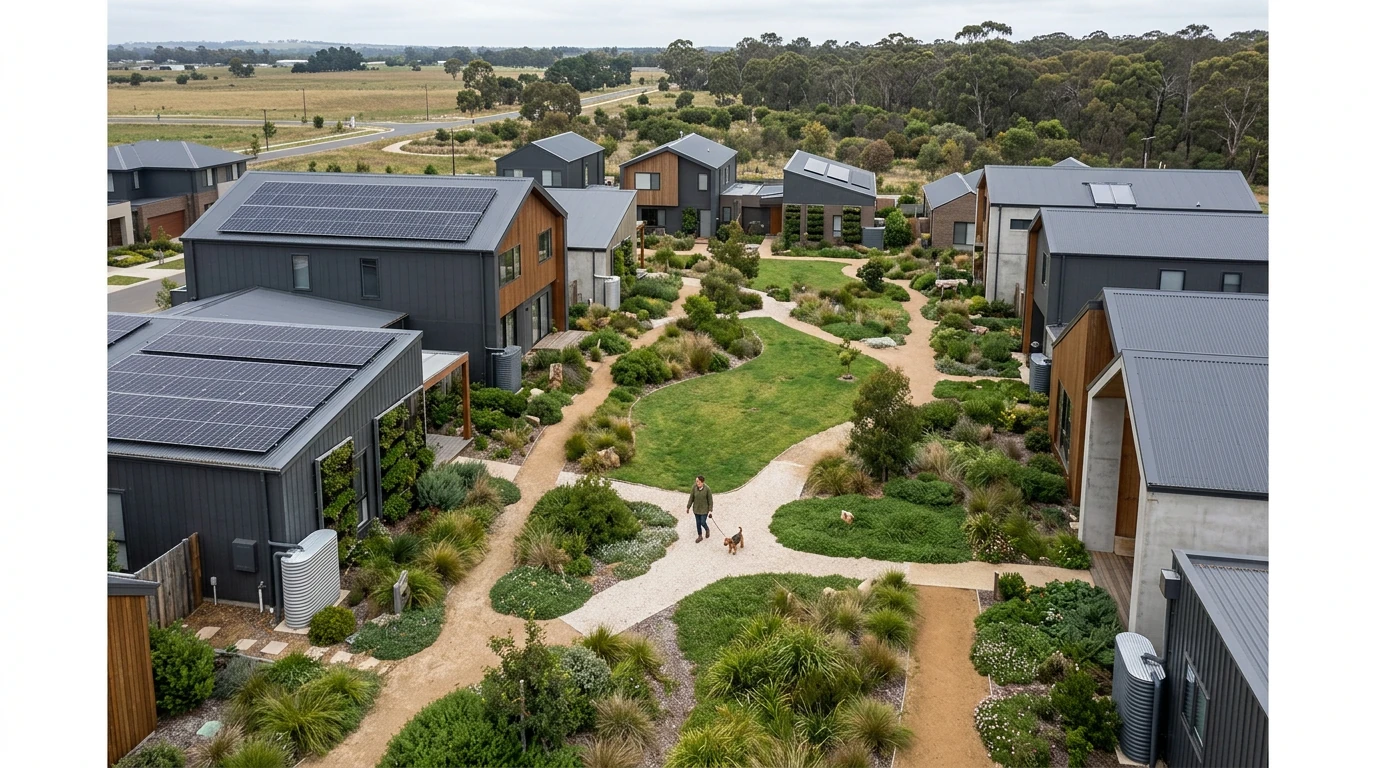
An energy-efficient home is far more than just a place with lower utility bills; it is a fundamentally more valuable asset in today’s market. Buyers are increasingly willing to pay a premium for properties equipped with features like high-efficiency HVAC systems, rooftop solar panels, and non-toxic building materials. But do these upgrades really justify a higher price tag? The market overwhelmingly says yes.
The evidence is compelling. Research from the National Association of Realtors indicates that homes with green certifications can sell for up to 9.5% more than their non-certified counterparts. For a home valued at $400,000, that represents an additional $38,000 at the time of sale. The underrated factor here is not just the price but the speed of sale, as these homes appeal directly to a growing demographic of informed buyers. Incorporating expert strategies for sustainable living into your home renovation plans can directly influence this outcome.
This is much like choosing a car with excellent fuel economy; the initial investment is quickly offset by ongoing savings and a stronger resale value down the road.
The Financial Impact of Healthier, Sustainable Lifestyles
The link between sustainable living and personal health carries a direct financial benefit that is surprisingly easy to overlook. Simple choices—like cycling instead of driving, prioritizing a diet of local produce, or ensuring good indoor air quality—can lead to significant reductions in healthcare spending over a lifetime. These habits actively mitigate risks for chronic conditions linked to both sedentary lifestyles and environmental pollutants.
For example, using non-toxic cleaning products and improving home ventilation can dramatically reduce indoor air pollution, a key trigger for asthma and allergies. According to the Environmental Protection Agency, indoor air can be two to five times more polluted than outdoor air, which leads to real costs in medication and doctor visits. Avoiding the common pitfalls of sustainable living ensures these health benefits are fully realized.
Beyond personal health, businesses that adopt green practices build substantial brand equity. A Cone Communications study found that 87% of consumers are more likely to purchase from a company that advocates for an issue they care about. This consumer loyalty translates directly into a more resilient customer base and a stronger bottom line, offering a competitive edge that is difficult to replicate.
These long-term values are not just fringe benefits; they create a powerful form of financial resilience that can better insulate your personal and professional life from future economic shocks.
Navigating Challenges and Future Outlook in Green Investments
Investing in a greener future isn’t a straight line to profits. A primary hurdle is greenwashing, where companies exaggerate their environmental commitment to attract investors. It’s a bit like navigating the grocery aisle; you have to look past the flashy packaging to read the actual ingredients. Investors must perform due diligence to avoid these common investment mistakes and ensure their capital supports genuine impact.
Regulatory frameworks can be unpredictable, creating uncertainty that makes some financiers hesitant. The initial costs for certain sustainable technologies can also be higher than traditional alternatives, requiring a longer-term perspective on returns. These are real financial considerations.
Despite these hurdles, the financial tide is turning decisively. What most people miss is that growing consumer demand for ethical products is forcing corporate hands. This shift is creating a powerful, self-sustaining economic engine. According to a recent analysis by BloombergNEF, the global green economy is projected to grow by 7.1% annually, presenting substantial opportunities for those who get in early.
The data suggests that innovation in sustainable finance is accelerating, with new financial products making it easier for everyday people to invest according to their values. As consumers become more educated on the science behind sustainability, their spending and investment choices will continue to shape the market. The future isn’t just about government mandates; it’s about a market responding to millions of individual, conscientious decisions.
Beyond Savings: Building Financial Resilience for an Uncertain Future
The financial case for sustainability is clear, but its most profound benefit may not be the immediate savings or investment returns. Instead, it’s about building personal and economic resilience in a world undergoing underlying change. The transition to a green economy isn’t a question of if, but when—and at what speed. Regulations, carbon pricing, and resource constraints will inevitably reshape markets.
By adopting sustainable practices and aligning your investments with this transition now, you are essentially future-proofing your finances. You are insulating your household from the volatility of fossil fuel prices and positioning your portfolio to thrive in the industries of tomorrow. The ultimate question, then, is not whether you can afford to embrace sustainability, but whether you can afford not to in the face of the economic shifts already on the horizon.
Frequently Asked Questions
How do sustainable choices lead to personal financial savings?
Sustainable choices directly reduce personal expenses in several key areas. Adopting energy-efficient appliances and proper home insulation lowers monthly utility bills, while choosing to repair items instead of replacing them cuts down on spending for new goods. reducing reliance on single-use products and minimizing food waste leads to significant savings on groceries and household supplies over time.
What are the most promising sectors for green investments?
The most promising sectors for green investments include renewable energy generation like solar and wind, as well as energy efficiency technologies such as smart grids and advanced battery storage. The circular economy, which focuses on recycling and remanufacturing, and sustainable agriculture, including the organic food market, also present significant growth opportunities driven by strong consumer and regulatory tailwinds.
Are there specific tax incentives for making my home more sustainable?
Yes, many federal, state, and local governments offer substantial tax incentives to encourage home sustainability. These frequently include tax credits for installing solar panels, geothermal heat pumps, or purchasing energy-efficient windows and insulation. It is always best to consult official government energy websites and your local utility provider for the most current and applicable programs in your area.
What is ESG investing and how does it differ from traditional investing?
ESG investing evaluates companies on Environmental, Social, and Governance criteria alongside traditional financial analysis. Unlike traditional investing, which may focus exclusively on profitability, ESG incorporates a company’s sustainability and ethical impact. This provides a more holistic view of long-term risk and resilience, as strong ESG performance often correlates with sound management and a durable business model.
Can sustainable practices increase a business’s profitability?
Absolutely. Sustainable practices can significantly boost a company’s bottom line by increasing operational efficiency and reducing resource costs. It also enhances brand reputation, attracting a growing segment of environmentally conscious consumers and talented employees. Ultimately, sustainability helps mitigate long-term regulatory and supply chain risks, leading to a more resilient and profitable business.


