Federal EV Incentives 2026: Your Guide to US Electric Vehicle Tax Credits
Anúncios
Latest Updates: Federal Incentives for Adopting Electric Vehicles in the US, Valid Through 2026
The landscape of transportation is rapidly evolving, with electric vehicles (EVs) at the forefront of this revolution. As concerns about climate change grow and the desire for energy independence intensifies, governments worldwide are implementing policies to accelerate the transition to electric mobility. In the United States, the federal government has rolled out a comprehensive suite of incentives designed to make owning and operating an EV more accessible and affordable for everyone. These federal EV incentives are not just about environmental stewardship; they’re about economic growth, technological advancement, and providing consumers with more choices for their transportation needs. Understanding these incentives is crucial for anyone considering making the switch to an electric vehicle, especially as they are set to remain largely in place through 2026.
Anúncios
Navigating the various tax credits, rebates, and programs can be complex, but the potential savings are substantial. From direct tax credits for purchasing new or used EVs to incentives for installing home charging infrastructure, the opportunities to save money while contributing to a greener future are abundant. This in-depth guide will break down the latest updates on federal EV incentives, clarify eligibility requirements, and offer practical advice on how to maximize these benefits. Whether you’re a first-time EV buyer, looking to upgrade, or a business considering electrifying your fleet, this article will serve as your definitive resource for understanding the federal support available through 2026.
Anúncios
The Cornerstone: The Clean Vehicle Tax Credit for New EVs
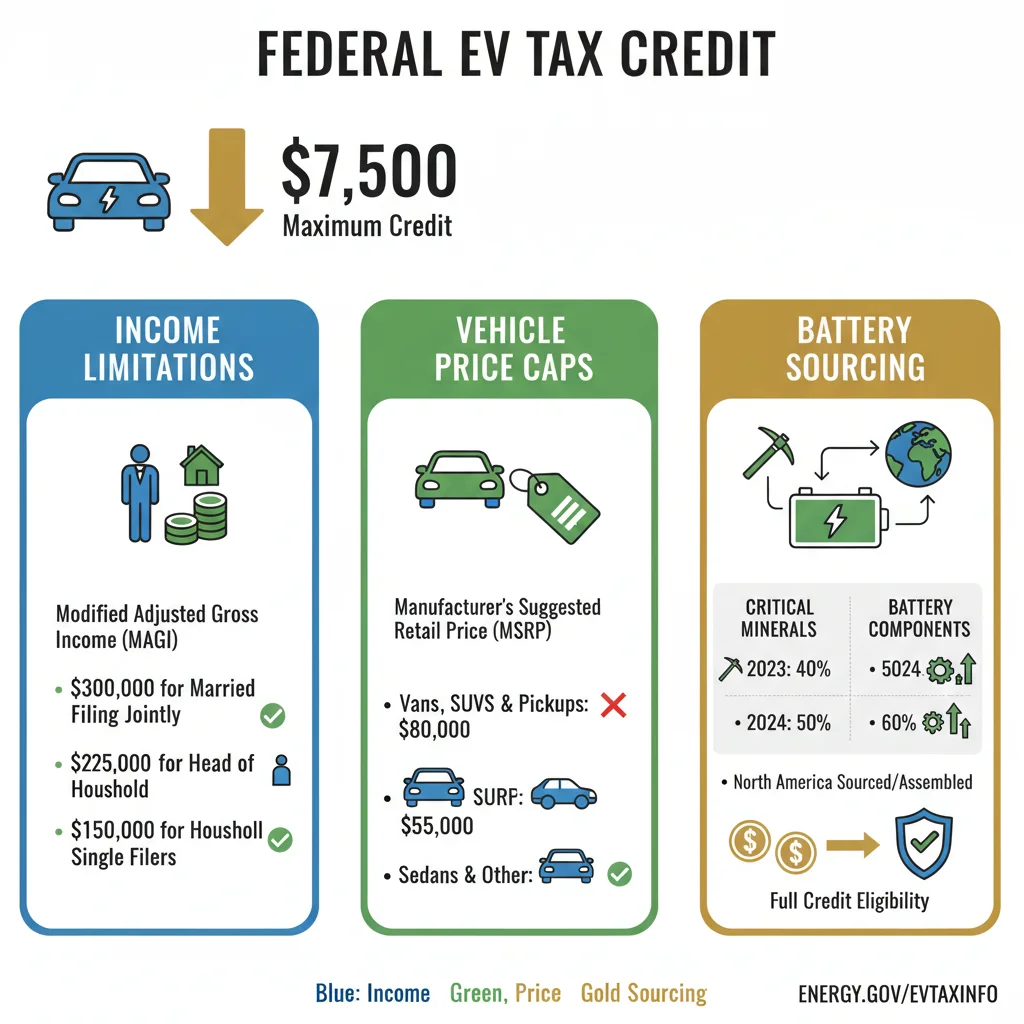
At the heart of the federal EV incentives program is the revamped Clean Vehicle Tax Credit, often referred to as the federal EV tax credit. This incentive offers up to $7,500 for eligible new clean vehicles. However, the eligibility criteria have become more stringent, focusing on ensuring that the benefits support vehicles with a significant portion of their battery components and critical minerals sourced or processed in North America or from countries with free trade agreements with the U.S. This strategic move aims to bolster domestic manufacturing and reduce reliance on foreign supply chains, aligning with broader economic and national security goals.
To qualify for the full $7,500 credit, a vehicle must meet two separate requirements, each worth $3,750:
- Critical Minerals Requirement: A certain percentage of the value of the battery’s critical minerals must be extracted or processed in the U.S. or a free-trade agreement country, or be recycled in North America. This percentage increases over time.
- Battery Component Requirement: A certain percentage of the value of the battery components must be manufactured or assembled in North America. This percentage also increases incrementally each year.
It’s important to note that a vehicle may qualify for only one part of the credit ($3,750) if it meets only one of these requirements, or for the full amount if it meets both. The list of eligible vehicles is dynamic and updated frequently by the IRS and the Department of Energy, so prospective buyers should always check the most current information before making a purchase decision. This list is crucial for consumers to determine if their desired EV qualifies for these significant federal EV incentives.
Vehicle and Buyer Eligibility for the New EV Tax Credit
Beyond the battery sourcing, there are specific requirements for both the vehicle itself and the buyer to qualify for the Clean Vehicle Tax Credit:
Vehicle Requirements:
- Manufacturer’s Suggested Retail Price (MSRP) Limits: Sedans must have an MSRP of $55,000 or less. SUVs, vans, and pickup trucks have a higher MSRP limit of $80,000. This is a critical factor for many luxury EV models.
- Gross Vehicle Weight Rating (GVWR): The vehicle must have a GVWR of less than 14,000 pounds.
- Battery Capacity: The vehicle must have a battery capacity of at least 7 kilowatt-hours (kWh).
- New Purchase: The vehicle must be purchased new and intended for use primarily in the U.S.
Buyer Requirements:
- Modified Adjusted Gross Income (MAGI) Limits:
- $300,000 for married couples filing jointly.
- $225,000 for heads of households.
- $150,000 for all other filers.
- Non-Resale Intent: The vehicle must be purchased for use, not for resale.
- Tax Liability: The credit is non-refundable, meaning it can reduce your tax liability to $0, but you won’t get a refund for any amount exceeding your tax liability.
A significant change introduced by the Inflation Reduction Act (IRA) is the ability for consumers to transfer the tax credit to the dealer at the point of sale. This means eligible buyers can receive the credit as an immediate discount on the purchase price, rather than waiting to claim it when filing their taxes. This ‘point-of-sale rebate’ feature dramatically improves the accessibility and immediate financial benefit of these federal EV incentives, making EV ownership more attainable for a wider range of consumers. This is a game-changer for many who previously found the upfront cost of EVs prohibitive.
Expanding Access: The Used Clean Vehicle Tax Credit
Recognizing that new EVs might be out of reach for some budgets, federal EV incentives also extend to the used market. The Used Clean Vehicle Tax Credit offers up to $4,000 or 30% of the sale price, whichever is less, for eligible pre-owned electric vehicles. This credit is a powerful tool for making EVs more affordable and accessible to a broader demographic, encouraging a robust secondary market for electric vehicles.
Eligibility for Used EV Tax Credit
Similar to new EVs, there are specific criteria for both the used vehicle and the buyer:
Used Vehicle Requirements:
- Sale Price Limit: The sale price must be $25,000 or less.
- Model Year: The vehicle must be at least two model years older than the calendar year in which it is purchased. For example, in 2024, you could purchase a 2022 model year vehicle or older.
- Dealer Sale: The vehicle must be purchased from a dealer. Private party sales do not qualify.
- First Transfer: It must be the first transfer of the vehicle to a qualified buyer after August 16, 2022.
- Previously Qualified: The vehicle must have been a qualified clean vehicle when new.
Buyer Requirements:
- MAGI Limits:
- $150,000 for married couples filing jointly.
- $112,500 for heads of households.
- $75,000 for all other filers.
- Non-Resale Intent: The vehicle must be purchased for use, not for resale.
- Not Previously Claimed: The buyer cannot have claimed another Used Clean Vehicle Tax Credit in the 3 years before the purchase date.
Just like with new EVs, the Used Clean Vehicle Tax Credit can also be transferred to the dealer at the point of sale, providing an immediate discount. This feature is particularly impactful for used car buyers, as it directly reduces the upfront cost, making these federal EV incentives even more attractive for budget-conscious consumers. This is a crucial step in democratizing EV ownership and accelerating the transition away from fossil-fuel vehicles.
Powering Up: Federal Incentives for EV Charging Equipment
Owning an EV is only part of the equation; having convenient and affordable access to charging is equally important. Recognizing this, federal EV incentives extend to the installation of home and commercial EV charging infrastructure. The Alternative Fuel Vehicle Refueling Property Credit (often called the home charging tax credit) provides a significant financial boost for individuals and businesses investing in charging equipment.
Residential Charging Equipment Tax Credit
For homeowners, this credit offers 30% of the cost of qualified charging equipment and installation, up to a maximum credit of $1,000. This includes Level 2 chargers and DC fast chargers. To qualify, the charging equipment must be installed in your home or on your property and be used for charging a vehicle primarily for personal use. This credit is available for property placed in service through December 31, 2032, providing a long-term incentive for homeowners to embrace EV charging at home.
The availability of this credit significantly reduces the barrier to entry for home charging, which is often cited as a major convenience factor for EV owners. Being able to ‘refuel’ your car overnight at home eliminates trips to gas stations and often results in lower per-mile fuel costs. These federal EV incentives for charging infrastructure are vital for supporting the broader adoption of electric vehicles.
Commercial and Business Charging Infrastructure Incentives
Businesses, too, can benefit from federal EV incentives for installing charging stations. The same Alternative Fuel Vehicle Refueling Property Credit applies, but with higher limits and broader scope. For businesses, the credit is 30% of the cost, up to $100,000 per item of property. This encourages workplaces, apartment complexes, retail centers, and other commercial entities to install charging infrastructure, making EVs more practical for employees, residents, and customers.
For charging equipment placed in service in low-income communities or non-urban census tracts, the credit can be even more substantial, aiming to ensure equitable access to EV charging. This strategic targeting helps to bridge the charging gap in underserved areas, fostering broader EV adoption across all communities. These business-focused federal EV incentives are crucial for building a robust and accessible charging network nationwide, which is essential for the long-term success of electric mobility.
Beyond Personal Vehicles: Commercial Clean Vehicle Tax Credit
The federal government is also keen on electrifying commercial fleets. The Commercial Clean Vehicle Tax Credit offers up to $7,500 for light-duty commercial vehicles and up to $40,000 for heavy-duty commercial vehicles (over 14,000 lbs GVWR). This incentive is designed to help businesses, from small delivery services to large logistics companies, transition their fleets to electric, reducing operational costs and emissions.
To qualify, the vehicle must be purchased for use or lease by the business and not for resale. It must also be a new vehicle, be propelled by an electric motor with a battery capacity of at least 7 kWh (for vehicles under 14,000 lbs GVWR) or 15 kWh (for vehicles over 14,000 lbs GVWR), and be primarily used in the U.S. This credit does not have the same income limitations or critical mineral/battery component requirements as the consumer tax credit, making it more straightforward for businesses to claim. These federal EV incentives are a powerful driver for the electrification of the commercial sector, leading to significant environmental and economic benefits.
State and Local Incentives: Stacking Your Savings
While federal EV incentives provide a strong foundation, it’s crucial to remember that many states and even local municipalities offer their own programs. These can include additional tax credits, rebates, reduced vehicle registration fees, free parking, or access to HOV lanes. Combining federal, state, and local incentives can dramatically reduce the total cost of EV ownership, sometimes making an EV even more affordable than a comparable gasoline-powered car.
For example, some states offer rebates that can be stacked on top of the federal tax credit, effectively doubling the immediate savings. Others provide grants for installing workplace charging stations or offer incentives for purchasing electric bikes. Always check with your state’s energy office or environmental protection agency, as well as your local utility provider, to discover all available programs in your area. Utility companies often have their own rebates for EV purchases or home charger installations, further enhancing the impact of federal EV incentives.
Navigating the Future: What to Expect Through 2026 and Beyond
The current framework of federal EV incentives, largely established by the Inflation Reduction Act, is designed to provide stability and long-term support for the EV market through 2032 for some components, with the core vehicle credits having significant impact through 2026. However, it’s important to stay informed as regulations and eligible vehicle lists can change. The dynamic nature of battery technology and supply chains means that the list of qualifying vehicles for the Clean Vehicle Tax Credit is updated regularly. Prospective buyers should always consult official IRS and Department of Energy resources for the most up-to-date information.
The focus on North American manufacturing and sourcing for battery components and critical minerals is a long-term strategy that will continue to shape the EV market. This ensures that the growth of the EV industry also translates into job creation and economic benefits within the U.S. and its allies. As the supply chain matures and more manufacturers adapt to these requirements, we can expect a greater number of vehicles to qualify for the full federal EV incentives.
Furthermore, ongoing discussions about infrastructure development, grid modernization, and renewable energy integration will continue to complement these financial incentives. The goal is not just to get more EVs on the road but to ensure they are powered by clean energy, creating a truly sustainable transportation ecosystem. The commitment to these federal EV incentives underscores a national strategy to lead in the global transition to clean energy and transportation.
Conclusion: Maximizing Your Savings with Federal EV Incentives
The federal government’s commitment to accelerating electric vehicle adoption in the United States is clear, with a robust suite of incentives designed to make EVs more affordable and accessible through 2026 and beyond. From the substantial Clean Vehicle Tax Credit for new and used EVs to incentives for installing charging infrastructure at home and for businesses, there are numerous opportunities to save money while contributing to a cleaner environment.
By understanding the eligibility criteria, keeping an eye on the frequently updated lists of qualifying vehicles, and exploring point-of-sale transfer options, consumers can significantly reduce the cost of purchasing an electric vehicle. Furthermore, stacking these federal EV incentives with state, local, and utility programs can lead to even greater savings, making the switch to electric more financially attractive than ever before. As the EV market continues to mature, these incentives play a critical role in driving innovation, fostering domestic manufacturing, and paving the way for a sustainable transportation future. Don’t miss out on these valuable opportunities to electrify your ride and your life.


