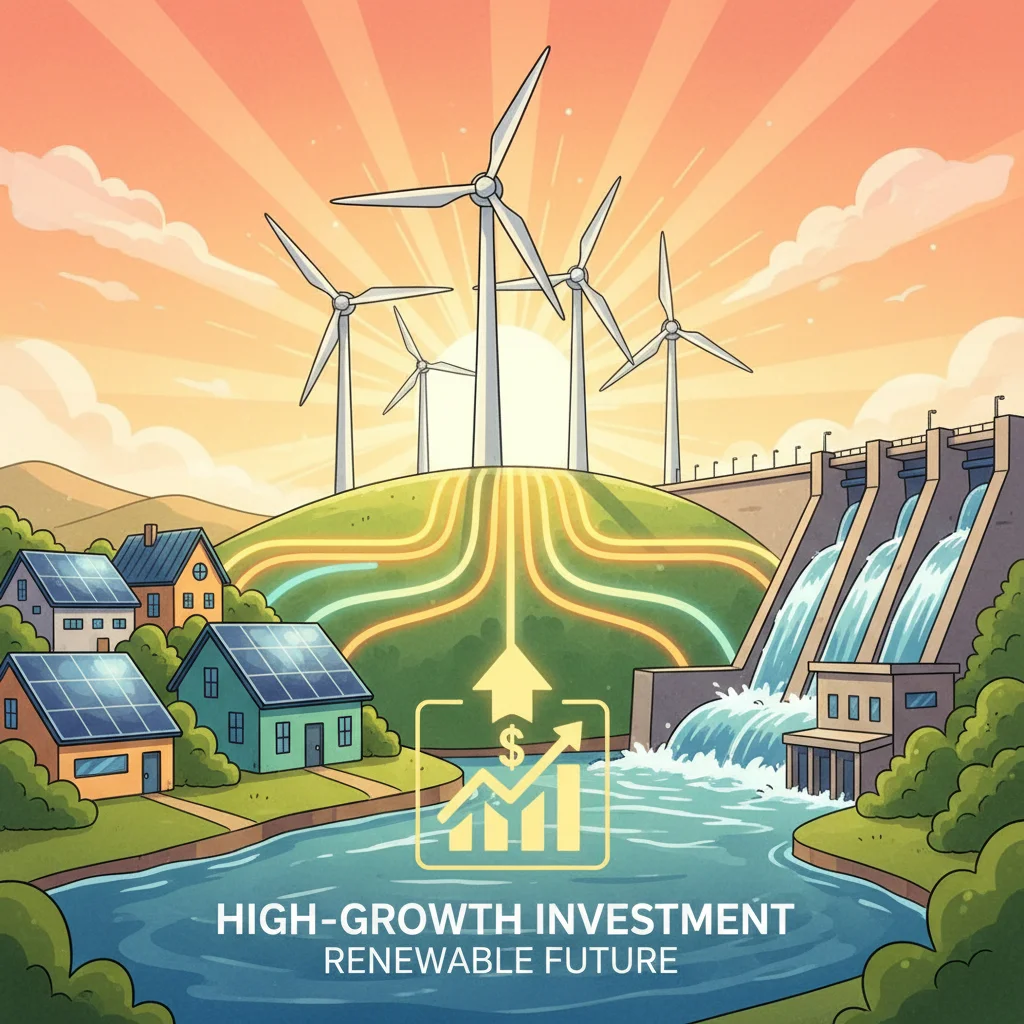
The 5 Best Renewable Energy Investment Opportunities for 2026 with Projected Returns Over 12%
The global energy landscape is undergoing a monumental transformation, shifting from fossil fuels to sustainable, clean sources. This paradigm shift isn’t just an environmental imperative; it’s a golden opportunity for investors seeking significant returns. As governments worldwide commit to ambitious climate goals and technological advancements drive down costs, renewable energy investments are poised for unprecedented growth. For those looking to diversify their portfolios and contribute to a greener future, 2026 presents a particularly attractive horizon, with several sectors projected to yield returns exceeding a robust 12%.
Anúncios
In this comprehensive guide, we delve into the top 5 renewable energy investment opportunities that are expected to shine in 2026. We’ll explore the underlying market dynamics, technological innovations, and policy support that make these areas particularly promising. Whether you’re a seasoned investor or new to the world of sustainable finance, understanding these trends is crucial for making informed decisions and capitalizing on the burgeoning green economy.
Anúncios
Why Renewable Energy Investments are Surging
The momentum behind renewable energy investments is multifaceted, driven by a confluence of factors that create a compelling case for growth:
- Global Climate Imperative: The urgency to combat climate change is undeniable. International agreements and national policies are increasingly stringent, pushing for a rapid transition away from carbon-intensive energy sources. This creates a regulatory tailwind for renewables.
- Technological Advancements: Innovations in solar panel efficiency, wind turbine design, battery storage, and smart grid technologies are continually improving performance and reducing costs. This makes renewable energy not just environmentally friendly, but also economically competitive, often cheaper than traditional fossil fuels in many regions.
- Decreasing Costs: The levelized cost of electricity (LCOE) for solar and wind power has plummeted over the past decade. This cost-effectiveness makes new renewable projects highly attractive to developers and investors alike, boosting the profitability of renewable energy investments.
- Government Incentives and Subsidies: Many governments offer tax credits, grants, and other incentives to support renewable energy projects, further enhancing their financial viability and de-risking investments.
- Increasing Corporate Demand: A growing number of corporations are committing to 100% renewable energy targets, driving demand for clean power purchase agreements (PPAs) and direct investments in renewable assets.
- ESG Investing Trend: Environmental, Social, and Governance (ESG) investing has moved from a niche concept to a mainstream financial movement. Investors are increasingly seeking opportunities that align with their values, making renewable energy investments a natural fit for ESG-focused portfolios.
- Energy Security: Relying on domestic renewable sources reduces dependence on volatile international fossil fuel markets, enhancing national energy security – a significant geopolitical driver for accelerated adoption.
These drivers collectively paint a picture of sustained growth and profitability for the renewable energy sector, making it a prime area for investors targeting high returns in the coming years.
1. Solar Power: The Enduring Leader in Renewable Energy Investments
Solar power continues to be the dominant force in renewable energy investments, and its trajectory for 2026 remains exceptionally strong. The sector benefits from continuous innovation, declining costs, and widespread applicability, from utility-scale solar farms to residential rooftop installations.
Market Dynamics and Growth Projections
The global solar market is expected to expand significantly, driven by:
- Cost-Effectiveness: Solar PV is now one of the cheapest forms of electricity generation in many parts of the world. This cost advantage is projected to widen as technology improves and manufacturing scales.
- Technological Advancements: Research into perovskite solar cells, bifacial modules, and advanced inverter technologies promises even higher efficiencies and lower costs. These innovations will unlock new markets and applications.
- Energy Storage Integration: The growing synergy between solar and battery storage systems is addressing intermittency issues, making solar a more reliable and dispatchable power source. This integration is a game-changer for grid stability and energy independence.
- Distributed Generation: The rise of residential and commercial rooftop solar, coupled with smart grid solutions, empowers consumers to become prosumers, reducing strain on centralized grids and offering resilience.
Investment Avenues and Projected Returns
Investors can tap into solar power through various channels:
- Solar Project Development Funds: Investing in funds that finance the development and construction of large-scale solar farms can offer attractive returns, often through a combination of equity and debt structures. These funds benefit from long-term power purchase agreements (PPAs) that provide stable revenue streams.
- Publicly Traded Solar Companies: Companies involved in solar panel manufacturing, inverter technology, project development, and installation offer liquidity and exposure to the broader market. Look for companies with strong balance sheets, innovative technologies, and expanding market share.
- Solar YieldCos and REITs: These entities own and operate portfolios of renewable energy assets, generating stable, predictable cash flows that are distributed to shareholders. They are often seen as lower-risk renewable energy investments with steady dividend yields.
- Green Bonds: Investing in bonds issued by solar companies or governments to finance solar projects offers a fixed-income approach to participating in the sector’s growth.
With continued government support, technological breakthroughs, and escalating demand, solar power investments are projected to yield returns upwards of 12-15% by 2026, particularly for well-managed projects and innovative companies.

2. Wind Energy: Harnessing the Power of the Air
Wind energy, particularly offshore wind, is another powerhouse in the renewable energy investments landscape, offering substantial growth potential. As turbine technology advances, allowing for larger and more efficient machines, the economic viability of wind power continues to improve.
Key Drivers and Innovation
The growth of wind energy is propelled by:
- Larger Turbines: Modern wind turbines are significantly larger and more powerful, capturing more wind energy and increasing efficiency. This reduces the cost per megawatt-hour.
- Offshore Wind Expansion: Offshore wind farms benefit from stronger, more consistent winds and fewer land-use constraints. Significant investments are being made globally in this area, particularly in Europe, Asia, and North America. Floating offshore wind technology is also gaining traction, opening up new deep-water locations.
- Hybrid Projects: Co-locating wind farms with solar installations and battery storage creates hybrid power plants that offer more consistent and reliable energy output, optimizing grid integration and maximizing land use.
- Advanced Analytics and AI: The use of artificial intelligence and advanced analytics for wind resource assessment, predictive maintenance, and operational optimization is further enhancing the profitability and reliability of wind projects.
Investment Opportunities and Expected Performance
Opportunities in wind energy include:
- Wind Farm Development and Operation: Investing in companies that develop, construct, and operate onshore and offshore wind farms provides direct exposure to the sector’s growth. These often involve long-term PPAs, ensuring stable revenue.
- Turbine Manufacturing and Components: Companies specializing in the design and manufacture of wind turbines, blades, gearboxes, and other critical components are essential to the industry’s supply chain.
- Offshore Wind Infrastructure Funds: Given the massive capital requirements for offshore wind projects, specialized infrastructure funds are emerging as attractive vehicles for investors. These funds often focus on the construction, installation, and maintenance of offshore facilities.
- Publicly Traded Wind Energy Companies: Similar to solar, publicly listed companies involved in various aspects of the wind energy value chain offer a liquid investment option.
The stability of long-term contracts and the scalability of projects make wind energy, especially offshore wind, a compelling area for renewable energy investments, with projected returns in the 10-14% range by 2026.
3. Geothermal Energy: Unlocking Earth’s Internal Heat
Often overlooked compared to solar and wind, geothermal energy offers a unique advantage: baseload power. Unlike intermittent solar and wind, geothermal plants can operate 24/7, providing a constant and reliable source of clean electricity. Recent technological advancements are unlocking new geothermal resources and reducing exploration risks, making it an increasingly attractive area for renewable energy investments.
Technological Breakthroughs and Market Potential
The resurgence of geothermal is driven by:
- Enhanced Geothermal Systems (EGS): EGS technology involves creating artificial reservoirs by fracturing hot, dry rock and circulating water to extract heat. This significantly expands the geographic reach of geothermal power generation beyond naturally occurring hydrothermal systems.
- Advanced Drilling Techniques: Innovations in drilling, inspired by the oil and gas industry, are making it more efficient and cost-effective to access deeper geothermal resources.
- Direct Use Applications: Beyond electricity generation, geothermal heat is increasingly used for direct heating and cooling in residential, commercial, and industrial applications, as well as for agricultural purposes (e.g., greenhouses). This diversifies revenue streams for geothermal projects.
- Small Modular Geothermal Plants: Development of smaller, modular geothermal plants can reduce upfront costs and deployment times, making projects more scalable and accessible.
Investment Opportunities and Return Expectations
Geothermal investment avenues include:
- Geothermal Project Development Companies: Investing in companies that specialize in the exploration, development, and operation of geothermal power plants. These often have high upfront costs but offer long-term, stable returns due to the continuous nature of the energy source.
- Technology Providers: Companies developing advanced drilling equipment, EGS technologies, or specialized heat exchange systems are crucial to the sector’s growth.
- Integrated Energy Solutions: Firms that combine geothermal power with other renewable sources or offer direct-use geothermal solutions for heating and cooling.
While still a smaller market than solar and wind, the baseload nature and expanding technological capabilities of geothermal make it a compelling long-term renewable energy investment with projected returns of 12-16% for successful, well-executed projects, especially as EGS technology matures.
4. Hydropower Modernization and Small Hydro: Revitalizing a Classic
Hydropower is the oldest and largest source of renewable electricity globally. While large-scale new dam construction faces environmental and social challenges, significant renewable energy investments opportunities lie in modernizing existing facilities and developing small-scale hydropower projects.
Trends and Innovations
The focus in hydropower is shifting towards:
- Plant Modernization and Efficiency Upgrades: Many existing hydroelectric plants are decades old. Investing in upgrading turbines, generators, and control systems can significantly increase efficiency, extend plant life, and boost output without building new infrastructure. This is a lower-risk, high-impact investment.
- Pumped Hydro Storage (PHS): PHS is the most mature and widely deployed grid-scale energy storage technology. As grids integrate more intermittent renewables, the demand for PHS to balance supply and demand is soaring. Investments in new PHS facilities or upgrading existing ones are critical.
- Small Hydropower: Developing small-scale hydropower projects (typically under 10 MW) on rivers and canals often has a lower environmental footprint and can provide localized, reliable power to remote communities. These projects can be quicker to permit and construct.
- Environmental Optimization: Innovations in fish-friendly turbines and ecological passage solutions are making hydropower more environmentally sustainable, addressing past concerns.
Investment Opportunities and Potential Returns
Investing in hydropower can involve:
- Hydropower Asset Acquisition and Upgrade: Acquiring older hydropower plants and investing in their modernization to improve efficiency and extend operational life. These assets often come with established revenue streams.
- Pumped Hydro Storage Projects: Investing in the development or expansion of pumped hydro storage facilities, which are becoming increasingly valuable for grid stability and renewable energy integration.
- Small Hydro Development Funds: Funds focused on developing a portfolio of small hydropower projects, often in emerging markets or underserved regions.
- Turbine and Equipment Manufacturers: Companies specializing in the manufacturing and installation of modern, efficient hydro turbines and associated equipment.
Hydropower, particularly through modernization and pumped storage, offers stable, long-term returns, often above 10-12%, due to its reliability and critical role in grid balancing. These renewable energy investments are considered lower risk due to proven technology and long asset lifespans.

5. Green Hydrogen: The Future of Decarbonization
Green hydrogen, produced by electrolyzing water using renewable electricity, is emerging as a critical component for decarbonizing hard-to-abate sectors like heavy industry, long-haul transport, and aviation. While still in its nascent stages compared to other renewables, the potential for exponential growth and transformative impact makes it a high-potential renewable energy investment for 2026 and beyond.
Market Outlook and Innovation Drivers
The green hydrogen market is characterized by:
- Policy Support: Governments globally are implementing strategies and significant funding to accelerate green hydrogen production and adoption, recognizing its role in achieving net-zero emissions.
- Electrolyzer Technology Advancements: Continuous innovation in electrolyzer efficiency, durability, and cost reduction is crucial for scaling up green hydrogen production. Companies developing advanced PEM (Proton Exchange Membrane) and AEM (Anion Exchange Membrane) electrolyzers are at the forefront.
- Cost Reduction: As renewable electricity costs continue to fall and electrolyzer manufacturing scales, the cost of green hydrogen is expected to become competitive with ‘grey’ hydrogen (produced from fossil fuels) within the next decade.
- Infrastructure Development: Investments in dedicated hydrogen pipelines, storage facilities, and refueling stations are essential for building a robust green hydrogen economy.
- Diverse Applications: Green hydrogen can be used as a clean fuel, a feedstock for green chemicals (e.g., ammonia, methanol), and a long-duration energy storage solution. This versatility broadens its market appeal.
Investment Avenues and High-Growth Potential
Investing in green hydrogen offers:
- Electrolyzer Manufacturers: Companies that design, produce, and install electrolyzers are central to the green hydrogen value chain. This is a high-growth, high-risk area with significant upside.
- Green Hydrogen Project Developers: Firms focused on developing large-scale green hydrogen production facilities, often co-located with dedicated renewable energy plants (solar or wind).
- Hydrogen Fuel Cell Technology: Companies developing and manufacturing hydrogen fuel cells for vehicles, industrial applications, and stationary power generation.
- Infrastructure Companies: Businesses involved in the transportation, storage, and distribution of hydrogen.
While subject to higher volatility due to its developmental stage, green hydrogen offers the potential for exceptional returns, possibly exceeding 15-20% by 2026, as the technology scales and market adoption accelerates. This is a long-term play with significant growth catalysts.
Key Considerations for Renewable Energy Investments
While the opportunities in renewable energy investments are compelling, it’s crucial to approach them with a clear strategy. Here are some key considerations:
- Due Diligence: Thoroughly research any company or project. Evaluate management teams, financial health, technological advantages, and market position.
- Policy and Regulatory Landscape: Understand the government incentives, regulations, and energy policies in the regions where you are investing, as these can significantly impact project viability and profitability.
- Technology Risk: While many renewable technologies are mature, others, like green hydrogen, still carry some technological risk. Diversify your investments across different maturity levels.
- Intermittency and Storage: For solar and wind, consider how intermittency is being addressed (e.g., through battery storage, grid integration, or hybrid projects) as this impacts reliability and revenue.
- Supply Chain Risks: Geopolitical events, trade policies, and material scarcity can impact the supply chain for renewable components.
- Long-Term Vision: Renewable energy investments often require a long-term perspective. Projects can have long development cycles, but once operational, they typically provide stable, predictable cash flows over decades.
- Diversification: As with any investment strategy, diversify across different renewable energy technologies, geographies, and investment vehicles (stocks, bonds, funds) to mitigate risk.
The Future is Green: Maximizing Your Portfolio with Renewable Energy
The transition to a sustainable energy future is not just an environmental necessity but a profound economic opportunity. The five sectors highlighted – solar, wind, geothermal, hydropower modernization, and green hydrogen – represent the vanguard of renewable energy investments, each offering unique risk-reward profiles and compelling growth trajectories for 2026 and beyond.
With projected returns often exceeding 12%, these opportunities underscore the financial viability and strategic importance of clean energy. By carefully evaluating these sectors and aligning investments with robust due diligence, investors can not only achieve significant financial gains but also play a pivotal role in accelerating the global shift towards a cleaner, more sustainable world. The time to invest in renewable energy is now, as the momentum continues to build, promising a lucrative and impactful journey for forward-thinking investors.
Embrace the power of sustainable finance and position your portfolio for long-term success in the rapidly expanding green economy. The future of energy is here, and it’s renewable.