Geothermal Energy U.S. 2035: Powering a Sustainable Future

Anúncios
The Future of Geothermal Energy in the U.S.: Projections for a 10% Market Share by 2035
The global energy landscape is undergoing a profound transformation, driven by an urgent need to mitigate climate change and achieve energy independence. Among the myriad renewable energy sources, geothermal energy stands out for its unique characteristics: it’s clean, reliable, and available 24/7, regardless of weather conditions. In the United States, a nation blessed with vast geothermal resources, the potential for this subterranean power source is immense. This article explores the ambitious projection of geothermal energy capturing a 10% market share in the U.S. by 2035, delving into the technological advancements, policy frameworks, economic implications, and environmental benefits that underpin this vision. We will also examine the challenges that must be overcome to realize this significant milestone, cementing geothermal energy’s role as a cornerstone of the nation’s sustainable future.
Anúncios
The concept of harnessing the Earth’s internal heat for energy is not new. From ancient hot springs used for bathing to early 20th-century power plants, humans have long recognized the power beneath our feet. However, it is in the 21st century that technological breakthroughs and a heightened environmental consciousness have truly propelled geothermal energy into the spotlight. The U.S., with its diverse geological formations, from the volcanic activity of the West to the deep sedimentary basins across the country, possesses an estimated 23,000 megawatts (MW) of identified geothermal resources, with an even greater potential for undiscovered resources.
Anúncios
Achieving a 10% market share for geothermal energy US by 2035 is an ambitious yet attainable goal. This would represent a significant increase from its current contribution, which is less than 1% of the nation’s electricity generation. To reach this target, a concerted effort across multiple sectors—government, industry, academia, and local communities—will be essential. This journey involves not only scaling up existing technologies but also innovating new methods to access and utilize geothermal heat more efficiently and economically.
Understanding Geothermal Energy: A Primer
Before diving into the specifics of the 2035 projection, it’s crucial to understand what geothermal energy entails. Geothermal energy originates from the heat within the Earth’s crust. This heat is continuously produced by the slow decay of radioactive particles in the Earth’s core. Traditional geothermal power plants typically tap into high-temperature hydrothermal reservoirs—underground pools of hot water and steam—to generate electricity. These reservoirs are often found in geologically active regions, such as the Western United States.
There are several types of geothermal power plants:
- Dry Steam Plants: These are the oldest and simplest type, directly using steam from a geothermal reservoir to turn a turbine.
- Flash Steam Plants: The most common type, these plants pump high-pressure hot water into a lower-pressure tank, causing some of it to ‘flash’ into steam, which then drives a turbine.
- Binary Cycle Plants: These plants use geothermal water to heat a secondary fluid with a lower boiling point, which then vaporizes to spin a turbine. This technology allows for electricity generation from lower-temperature geothermal resources, significantly expanding the viable resource base.
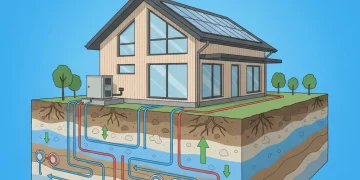
Beyond electricity generation, geothermal energy also plays a vital role in direct-use applications, such as district heating, greenhouse warming, industrial processes, and aquaculture. Geothermal heat pumps, a separate but related technology, utilize the stable underground temperature to provide efficient heating and cooling for buildings. These diverse applications underscore the versatility and broad potential of geothermal energy.
The Current Landscape of Geothermal Energy in the U.S.
The U.S. is currently a global leader in geothermal electricity generation, primarily concentrated in states like California, Nevada, Utah, and Oregon. The Geysers in California, for instance, is the largest complex of geothermal power plants in the world. However, despite this leadership, geothermal energy’s overall contribution to the national grid remains modest. The existing capacity primarily relies on conventional hydrothermal resources, which are geographically limited.
Several factors have historically constrained the growth of geothermal energy US:
- High Upfront Costs: Exploration and drilling for geothermal resources can be expensive and carry significant risk.
- Geographical Limitations: Conventional geothermal sites are not uniformly distributed, limiting deployment to specific regions.
- Permitting and Regulatory Hurdles: The process of obtaining permits for geothermal projects can be lengthy and complex.
- Lack of Public Awareness: Compared to solar and wind, geothermal energy often receives less public attention and understanding.
Despite these challenges, the unique advantages of geothermal energy—its baseload power capabilities, small land footprint per megawatt, and minimal environmental impact—make it an indispensable component of a diversified clean energy portfolio. Its ability to provide continuous power, unlike intermittent solar and wind, makes it an ideal complement to other renewables, enhancing grid stability and reliability.
Path to 10% Market Share by 2035: Key Drivers and Innovations
Achieving a 10% market share for geothermal energy in the U.S. by 2035 will require a proactive approach, driven by technological innovation, supportive policies, and strategic investments. Several key drivers are poised to accelerate this growth:
1. Enhanced Geothermal Systems (EGS)
EGS technology is perhaps the most significant game-changer for geothermal energy. EGS aims to create human-made geothermal reservoirs in hot, dry rock formations where natural permeability is insufficient. This involves injecting fluid at high pressure to create or enhance fractures in the rock, allowing water to circulate, absorb heat, and be brought to the surface. EGS can unlock vast geothermal resources across the U.S., making geothermal energy accessible in regions previously deemed unsuitable.

The Department of Energy’s (DOE) Frontier Observatory for Research in Geothermal Energy (FORGE) initiative is at the forefront of EGS research and development. FORGE is a dedicated underground field laboratory focused on developing and testing EGS technologies. Success in EGS could dramatically expand the recoverable geothermal resource base, transforming the geothermal energy US landscape.
2. Advanced Drilling Technologies
Drilling costs represent a substantial portion of geothermal project expenses. Innovations in drilling technology, including advanced rotary steerable systems, plasma drilling, and autonomous drilling rigs, are crucial for reducing these costs and increasing drilling efficiency. Deeper drilling capabilities will allow access to higher temperatures and more extensive resources, further bolstering the economic viability of geothermal projects.
3. Co-produced Geothermal from Oil and Gas Wells
An innovative approach involves extracting geothermal heat from existing or abandoned oil and gas wells. Many sedimentary basins contain hot fluids that can be used for geothermal power generation. This ‘co-produced’ geothermal energy offers a cost-effective way to repurpose existing infrastructure and leverage the expertise of the oil and gas industry, potentially accelerating deployment in regions with suitable geology.
4. Supportive Government Policies and Incentives
Policy support is paramount for fostering the growth of any emerging energy sector. In the U.S., various federal and state incentives, such as tax credits (e.g., the Investment Tax Credit), grants, and loan programs, are critical for de-risking investments in geothermal projects. Streamlining permitting processes and establishing clear regulatory frameworks will also be essential to reduce project timelines and costs. Furthermore, renewable portfolio standards (RPS) and clean energy mandates at the state level can create a stable market demand for geothermal electricity.
5. Energy Storage Solutions and Hybrid Systems
While geothermal energy is inherently baseload, integrating it with energy storage solutions or other renewable sources (hybrid systems) can further optimize grid performance. For example, combining geothermal with solar PV or wind can create a more resilient and flexible power supply. Research into advanced geothermal storage concepts, such as thermal energy storage, can enhance the dispatchability of geothermal plants.
Economic and Environmental Benefits of Increased Geothermal Deployment
The expansion of geothermal energy US to a 10% market share by 2035 would yield significant economic and environmental benefits:
Economic Benefits:
- Job Creation: Geothermal projects create high-quality, long-term jobs across various sectors, including exploration, drilling, construction, operations, and maintenance. These jobs are often localized and contribute to regional economic development.
- Energy Independence and Security: By utilizing domestic energy resources, the U.S. can reduce its reliance on volatile global energy markets and enhance its energy security.
- Stable Electricity Prices: Geothermal power plants have low operating costs and are not subject to fuel price volatility, leading to more stable and predictable electricity prices for consumers.
- Rural Economic Development: Many geothermal resources are located in rural areas, providing economic opportunities and tax revenues for local communities.
- Technological Leadership: Investment in geothermal research and development can position the U.S. as a leader in advanced energy technologies, fostering innovation and export opportunities.
Environmental Benefits:
- Reduced Greenhouse Gas Emissions: Geothermal power plants produce minimal to zero greenhouse gas emissions, significantly contributing to climate change mitigation efforts.
- Minimal Land Use: Compared to other renewable energy sources like large-scale solar farms or wind farms, geothermal power plants have a relatively small land footprint per megawatt of capacity.
- Low Water Consumption: While some geothermal plants use water for cooling, binary cycle plants, which are becoming more prevalent, can operate with closed-loop systems, minimizing water consumption.
- Air Quality Improvement: By displacing fossil fuel-based generation, geothermal energy reduces air pollutants, leading to improved public health outcomes.
Overcoming Challenges on the Road to 2035
Despite the immense potential and compelling benefits, realizing a 10% market share for geothermal energy US by 2035 is not without its hurdles. Addressing these challenges will be critical for success:
1. Resource Exploration and Confirmation
Finding viable geothermal resources requires extensive geological surveys, seismic imaging, and exploratory drilling. This process can be time-consuming and expensive, carrying inherent geological risk. Advanced exploration techniques and data analytics can help de-risk this phase.
2. High Upfront Capital Costs
The initial capital investment for geothermal projects, particularly EGS, can be substantial. While operational costs are low, securing financing remains a significant challenge. Innovative financing mechanisms, public-private partnerships, and robust incentive programs are needed to attract investment.
3. Permitting and Regulatory Complexity
The permitting process for geothermal projects can be fragmented across various federal, state, and local agencies, leading to delays and increased costs. Streamlining these processes and establishing clear, consistent regulatory guidelines will be essential.
4. Seismicity Concerns with EGS
A concern associated with EGS is the potential for induced seismicity (small earthquakes) due to fluid injection. While typically minor, careful monitoring, advanced modeling, and best practices in reservoir management are crucial to mitigate these risks and ensure public safety and acceptance.
5. Public Awareness and Acceptance
Raising public awareness about the benefits and safety of geothermal energy is vital. Educating communities about the technology, its environmental advantages, and its economic contributions can foster greater acceptance and support for new projects.
6. Transmission Infrastructure
Many prime geothermal resources are located in remote areas, necessitating significant investment in new transmission infrastructure to connect these plants to urban load centers. Coordinated planning between geothermal developers and transmission operators is essential.

Addressing these challenges requires a multi-faceted approach, combining sustained research and development, supportive policy frameworks, strategic investments, and effective public engagement. The collaborative efforts of government agencies, private industry, and research institutions will be pivotal in overcoming these obstacles.
Case Studies and Success Stories
To illustrate the feasibility of expanding geothermal energy US, it’s worth looking at current successes and promising projects:
- The Geysers, California: As mentioned, this complex has been operating for decades, demonstrating the long-term reliability and viability of geothermal power. Continuous innovation here ensures its sustained output.
- Nevada’s Geothermal Boom: Nevada has seen significant growth in geothermal development, particularly with binary cycle plants, leveraging lower-temperature resources and contributing substantially to the state’s renewable energy portfolio.
- FORGE Utah: The Frontier Observatory for Research in Geothermal Energy in Milford, Utah, is a groundbreaking site dedicated to advancing EGS. Its success in demonstrating the technical and economic viability of EGS will be crucial for unlocking the broader geothermal resource base across the nation.
- Ormat Technologies: A leading global geothermal company with a strong presence in the U.S., Ormat has consistently developed and operated successful geothermal projects, showcasing the commercial potential and scalability of the technology.
These examples highlight that while challenges exist, the geothermal industry has a proven track record of innovation and successful project deployment. Learning from these experiences and scaling up best practices will be essential for future growth.
The Role of Research and Development
Continued investment in research and development (R&D) is non-negotiable for achieving the 10% market share target. Key areas of R&D focus include:
- Enhanced Geothermal Systems (EGS) Optimization: Further research into reservoir engineering, fracture stimulation techniques, and seismic monitoring to improve efficiency and reduce risk.
- Advanced Geothermal Exploration: Developing more accurate and cost-effective methods for identifying and characterizing geothermal resources.
- Materials Science: Creating new materials that can withstand high temperatures and corrosive environments found in geothermal reservoirs, improving equipment longevity and performance.
- Closed-Loop Geothermal Systems: Exploring technologies that circulate a working fluid in a sealed loop, minimizing water use and the need for fluid injection into the Earth.
- Hybrid Systems and Storage: Research into optimal integration of geothermal with other renewables and energy storage technologies to maximize grid benefits.
- Direct Use and Geothermal Heat Pumps: Improving the efficiency and applicability of direct-use geothermal and heat pump technologies for various sectors.
Federal funding through agencies like the Department of Energy, coupled with private sector investment, will be critical in driving these R&D efforts forward. Collaborative research between national labs, universities, and industry partners will accelerate the pace of innovation.
Policy Recommendations for a Geothermal Future
To ensure geothermal energy US reaches its full potential, a robust and consistent policy framework is essential:
- Long-Term Tax Incentives: Extending and expanding federal tax credits (e.g., Investment Tax Credit) for geothermal projects, providing long-term certainty for investors.
- Streamlined Permitting: Implementing ‘fast-track’ permitting processes for geothermal projects, particularly on federal lands, while maintaining environmental safeguards.
- Federal Research Funding: Increasing sustained funding for geothermal R&D, especially for advanced technologies like EGS and drilling innovations.
- Geothermal Mandates/Incentives: Encouraging states to include geothermal energy in their renewable portfolio standards and offer specific incentives for its deployment.
- Workforce Development: Investing in educational and training programs to build a skilled workforce capable of supporting the growing geothermal industry.
- Public Engagement Campaigns: Launching national and local campaigns to raise awareness about geothermal energy’s benefits and address misconceptions.
- Grid Modernization: Investing in grid infrastructure upgrades to accommodate increased renewable energy penetration, including geothermal.
These policy measures, implemented in conjunction with technological advancements, can create a favorable environment for rapid geothermal expansion.
Conclusion: A Sustainable and Resilient Energy Future with Geothermal
The vision of geothermal energy securing a 10% market share in the U.S. by 2035 is an ambitious but achievable goal. It represents a significant step towards a cleaner, more resilient, and energy-independent future. Geothermal energy offers a unique blend of continuous baseload power, minimal environmental impact, and substantial economic benefits, making it an indispensable component of the nation’s clean energy transition.
The journey to 2035 will require sustained commitment to technological innovation, particularly in Enhanced Geothermal Systems and advanced drilling. It will also demand robust policy support, streamlined regulatory processes, and strategic investments from both public and private sectors. Overcoming challenges related to exploration costs, financing, and public perception will be crucial.
As the world grapples with the imperatives of climate change and energy security, the reliable, clean power beneath our feet offers a profound solution. By embracing and investing in geothermal energy US, the nation can not only meet its ambitious climate goals but also foster economic growth, create jobs, and secure a sustainable energy future for generations to come. The Earth’s internal heat is a boundless resource, waiting to be fully unleashed to power our progress.
The path forward is clear: continued collaboration, innovation, and strategic investment will unlock the full potential of geothermal energy, transforming it from a niche player into a mainstream clean energy powerhouse in the United States by 2035 and beyond.